
Alejandro Rangel — October 13, 2026
When the war on Iran began in February, the Strait of Hormuz, which normally carries about a fifth of the world’s oil and gas, was effectively closed, and the oil market had to find another way out. As a matter of fact, Saudi Arabia found one. It sent more crude through its East-West pipeline to Yanbu, a port on the Red Sea, and turned it into a major export hub. The plan worked, but it came with a catch. Nearly 70 percent of Yanbu’s crude now goes to China, India, and East Asia, which means most of it has to pass through the Bab al-Mandeb, a narrow strait between Yemen and the Horn of Africa.
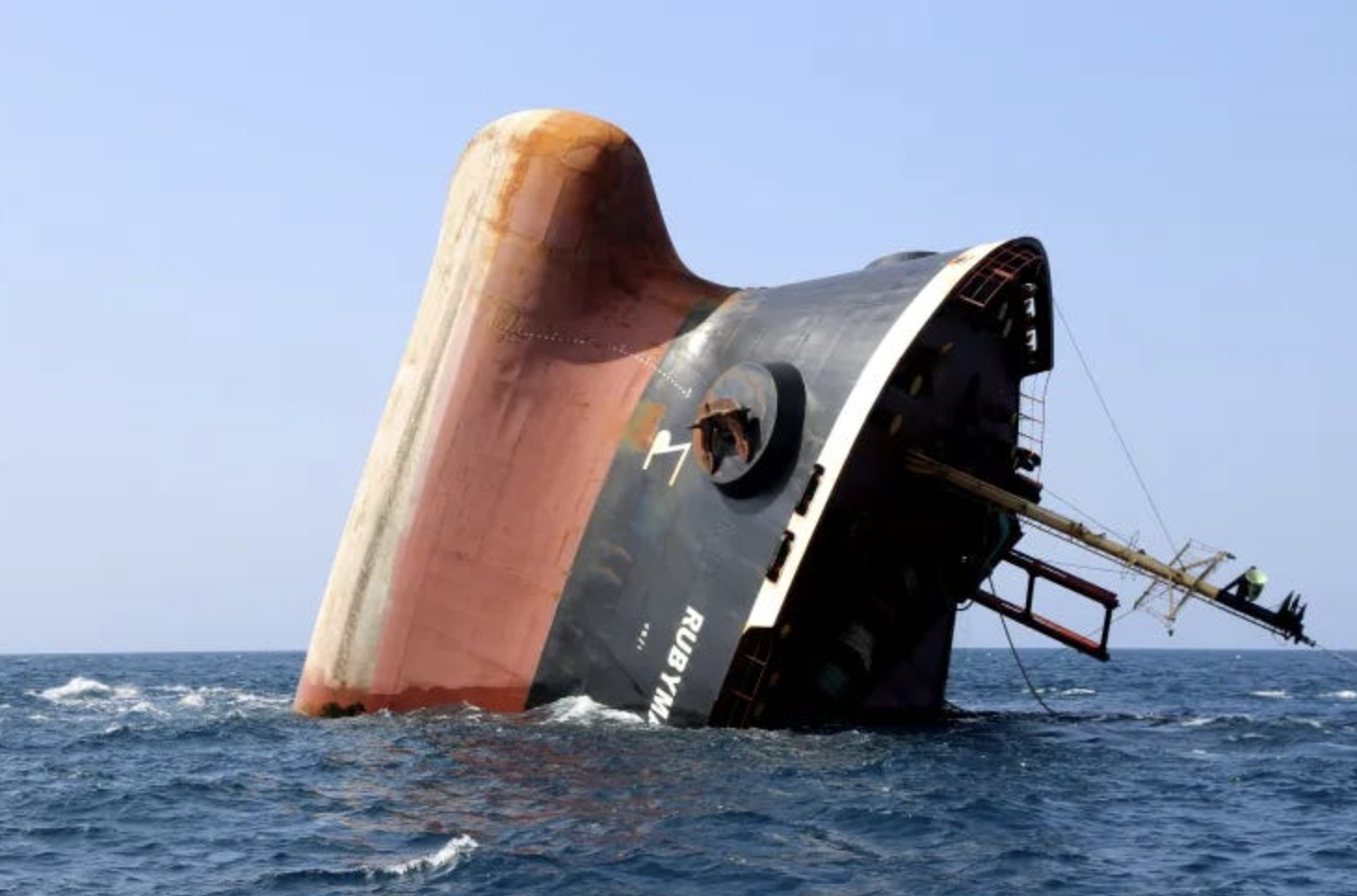
That strait is now under threat from the Houthis, the Iran-backed group that controls much of northern Yemen. On July 20th, they declared a blockade on Saudi shipping in the Red Sea. Less than a month later, a strike on the Egyptian-owned cargo ship Tihamah killed at least six people, according to Yemen’s government. Those were the first shipping deaths tied to the Houthis since the Iran war started. The effect shows up in the numbers. One analysis counted about 22 ships a day crossing the strait in August, down from more than 51 a day in October 2023. By mid-September, the Houthis had also reportedly taken the port of Mocha and Perim Island, putting them roughly 20 kilometers from the African coast.
Oddly, one country has benefited. Egypt’s Suez Canal collected $505 million in July, up 42 percent from a year earlier, its best month since December 2023. Hormuz and the Houthi threat have pushed more ships toward the canal, and rerouted Saudi oil likely explains part of the jump. However, the rebound is fragile. Traffic and revenue remain well below pre-Gaza war levels, and Egyptian authorities have estimated the Red Sea crisis has cost the canal at least $9 billion in lost revenue. Under normal conditions the canal handles around 12 percent of global seaborne trade, so its health matters well beyond Egypt.
For shippers, the alternative is a long one. Sailing around the Cape of Good Hope can add 10 to 14 days to a voyage, along with extra fuel and insurance costs. Some European carriers had started bringing ships back to the Red Sea, a decision that looks riskier now.
The main takeaway is that closing one chokepoint doesn’t remove the risk, it simply moves it. Hormuz pushed oil toward the Red Sea, and now the Red Sea has an armed group threatening the route. Every workaround creates a new dependency, and the cost eventually reaches ordinary people through higher fuel and shipping prices. Until at least one of these routes is reliably safe, global trade will keep squeezing through a few narrow passages with little to no room for error.
Read more here: