
Blake McFalls — November 10, 2026
SpaceX CEO Elon Musk recently cut Ukraine’s access to Starshield, the satellite internet system that Ukraine has used for communications and drone functionality. Yet Ukraine not only battles on, but it holds its own. Ukraine’s adaptability to difficult circumstances can be attributed to the culture of learning within its military.
At the core of Ukraine’s adaptability is the bottom-up structure of the military-industrial complex. Unlike most militaries, where the government is the source of innovation and development decisions, Ukraine has a unique hybrid structure. While the top-down structure of the Soviet military lingers, many of the weapons being developed and used in Ukraine come from small groups and startups. The Center for Strategic and International Studies has a convenient graphic that illustrates this:

Not only do many procurement contracts give contractors liberty in creating their preferred type of weapon system, but a new system has emerged since 2022. Over 700 small military units receive a part of the budget and are allowed to make purchases without government approval. As a result, these units are able to turn battlefield observations into informed procurement decisions extraordinarily quickly. This learning cycle — widely known as the Observe, Orient, Decide, Act (OODA) Loop — was conceived by Air Force Colonel John Boyd, who theorized that modern battlefield victory was not determined by firepower, which is an advantage for Russia, but how quickly the OODA Loop could be performed. Ukraine is winning that battle.
The blistering speed at which small units can make independent decisions is creating the ecosystem that will build Ukraine’s future in the conflict. Startups experimenting with new battlefield technology have become so prevalent that Ukraine’s Ministry of Defence created Blast1, an ecosystem consisting of over 2,500 companies. Startups within the ecosystem enjoy easy access to grants, which are used for drone, missile, and electronics manufacturing.
Ukraine’s method of quick learning and adaptation has contributed to its success in drone warfare. Integration of DELTA, a drone command and control software developed in 2014, accelerated in February 2022. Early on, small military units grasped the asymmetric capability that DELTA-powered drones provide. Offensively, first-person view (FPV) drones cost just around $300-$400, which, in operations such as Operation Spiderweb, can inflict billions of dollars worth of damage on the opponent. Critically, on the defensive side, $1,000 Sting interceptor drones from Wild Hornets routinely knock out jet-powered Shahed drones and even missiles. Small units who observe drone capabilities continue to purchase them, building the demand necessary for Ukraine’s drone production base to flourish. Indeed, Ukrainian manufacturers are on track to make 5-6 million drones this year, with the capacity to make 20 million annually with adequate European funding.
It is safe to say that Ukraine is reliant on drones, specifically on the system startups and small units have built. Brave1-backed startups have even begun to experiment with “gamifying” drone warfare, training spatial awareness and reflexes on modified GTA V versions and creating point leaderboards for targets neutralized by remote-controlled drones. Yet Ukraine’s drones have always had a vulnerability: internet. In order to provide footage to and be controlled by soldiers, drones need internet. Until late October, SpaceX’s Starshield was Ukraine’s answer, but Ukraine can no longer rely on Starshield.
The exact conditions that caused the ascent of Ukraine’s drone sector have allowed Ukraine to rebound quickly. Fiber-optic tethered drones have long been Ukraine’s answer to internet issues, originally used to hedge against electronic jamming. Yet in just over two weeks, Ukraine has started pursuing long-term solutions. As an immediate satellite replacement, Ukraine is working with HiSKY, an Italian-Israeli firm. Furthermore, Himera, a defense communications firm, is building 100 of Ukraine’s own satellites. While a communications network will not replace Starshield alone, satellite testing will provide Ukraine’s private sector the lessons it needs to eventually do so.
All in all, these strategies have prevented calamity for Ukraine’s drone capabilities. Between October 14 and October 24, between which was the day Starshield was likely cut off, Ukraine’s interceptor success rate only dropped from 77% to 74%, still an improvement from its still-respectable September figure of 60%. Ukraine is still conducting counterattacks, a few of which notably stalled a dangerous Russian offensive.
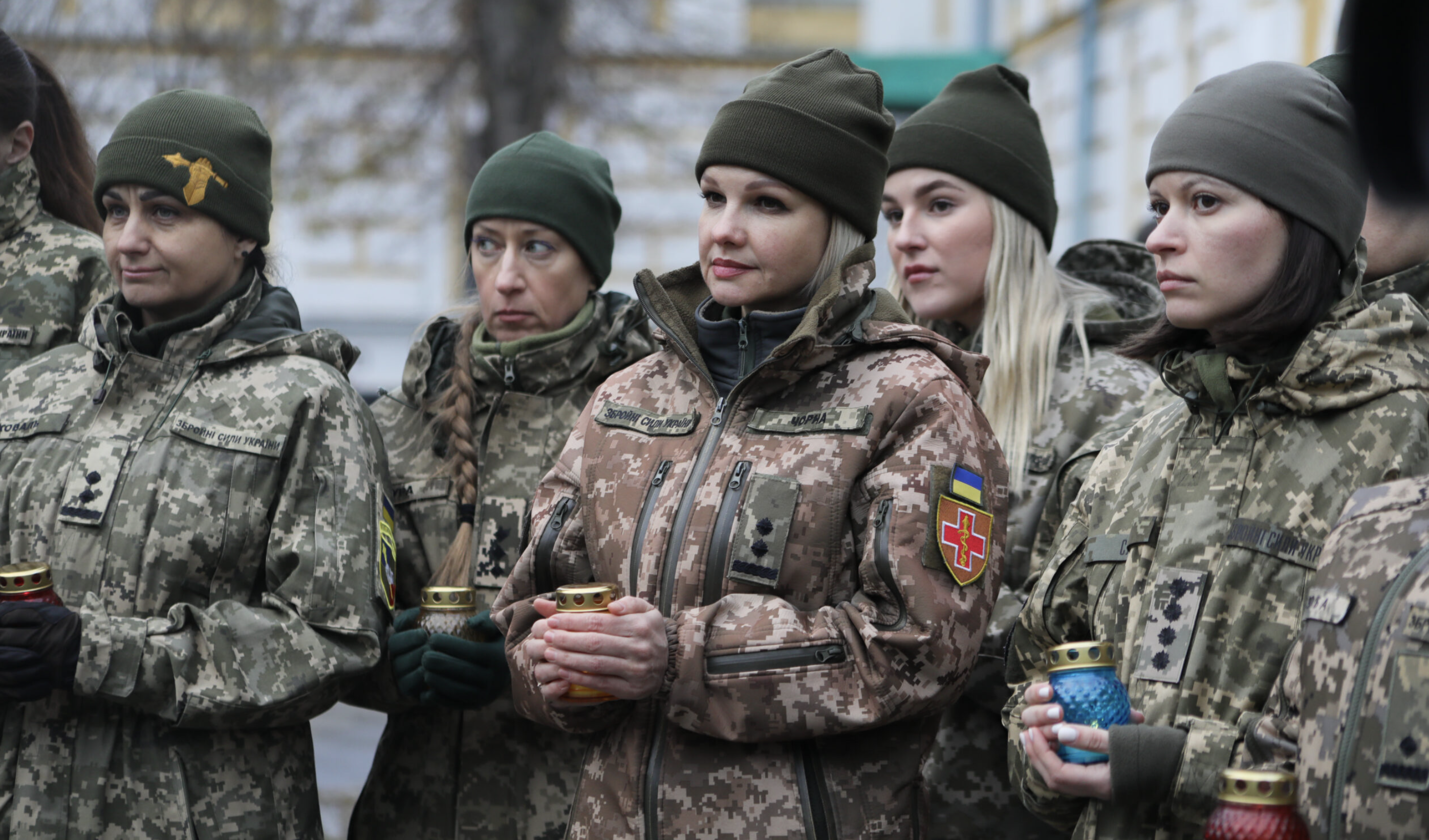
Ukraine’s resilience can be owed to its dedication to learning. Retired Lieutenant General Curtis Buzzard noted to CSIS that from the time he spent in Ukraine, the military’s greatest weapon is its culture of learning. That is what makes Ukraine so difficult to crack.
Read more here: