
Lindsey Zhao — April 7, 2026
“Open the F***in’ Strait, you crazy b*stards, or you’ll be living in Hell.”
— US President Donald J. Trump, Easter Sunday
Since the US and Israel launched a war against Iran in late February, the conflict has escalated to have global implications—especially since Iran has responded by effectively closing the Strait of Hormuz, one of the world’s busiest oil shipping channels that typically carries 20–30% of global oil and liquefied natural gas (LNG).
The upward pressure this crisis has placed on gas prices—with the average cost of gasoline recently hitting $4.11 per gallon in the US—is straining the wallets of millions of Americans and placing an additional political stressor on President Trump as he carries out the war. These tensions were particularly evident on Easter Sunday, when President Trump posted a curse-filled message on Truth Social, threatening to bomb Iran’s bridges and power plants if they refused to open the Strait of Hormuz.
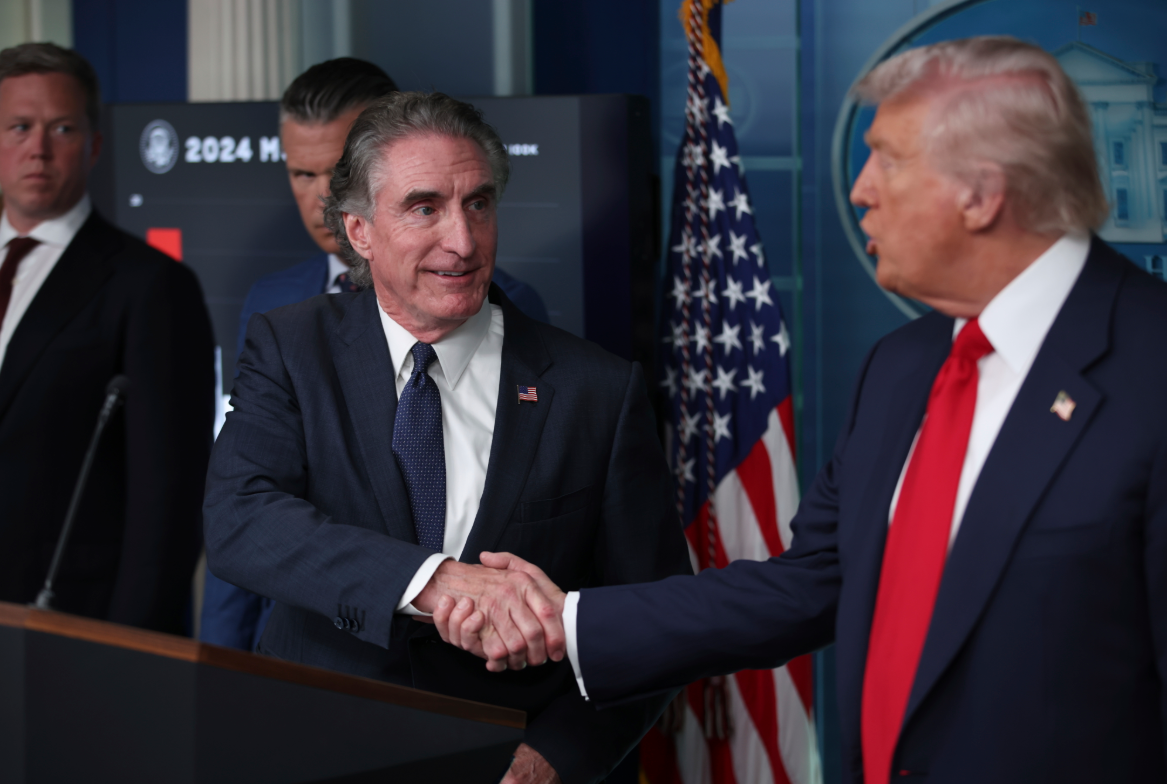
The President’s blunt, combative political style is a hallmark of his appeal to many of his supporters. And while the President regularly posts similar outbursts on social media, usually without the cursing, Democratic politicians and experts on presidential communications warn that President Trump’s recent threats against Iran are a dangerous escalation of rhetoric that could undermine global American credibility and domestic support for the war.
In previous wars, recent US presidents have tried to emphasize restraint and diplomacy in their messaging, even when using destructive force. In contrast, many of the communications released by the White House have been, according to retired Air Force judge advocate Professor Rachel VanLandingham, a “crass trivialization” of combat operations that suggest this a “bloodthirsty” administration.
So what’s different about this war, and are the words that President Trump and his top government allies use to talk about it truly important?
First, the administration’s use of memes to depict their battlefield wins over Iran, although funny to some, has come under fire from veterans and politicians for their insensitivity towards the destruction of warfare. George Washington University political scientist Peter Loge explains that “[b]y making war like a game or cartoon, that removes the reality of war from people’s minds.” The administration has posted videos ranging from bowling pins labeled “Iranian regime officials” being knocked down by professional players to spliced-together clips of Grand Theft Auto and Iranian strikes. This “memefication” of foreign policy is seen as the latest example of US presidents using new technology—like Roosevelt’s Fireside Chats or Johnson’s “Television War” during Vietnam—to increase support for the war.
The administration’s tone when actually talking about the war and Iran has also been criticized for an uncharacteristic lack of restraint.
For example, when President Trump announced the death of Supreme Leader Ayatollah Ali Khamenei, he also called him a “wretched and vile man” and “one of the most evil people in history.” In contrast, George W. Bush merely said that US forces “captured Saddam Hussein alive,” and Obama simply introduced Osama bin Laden as the “leader of al Qaeda, and a terrorist.” True, George W. Bush still called North Korea, Iraq and Iran an “Axis of Evil,” but even he steered clear of personal insults to individual politicians.
President Trump has previously joked that it was “more fun” to sink Iranian ships rather than seize them, and Secretary of War Pete Hegseth boasted during a press conference about the U.S.’ military superiority, saying, “This was never meant to be a fair fight, and it is not a fair fight. We are punching them while they’re down, which is exactly how it should be.” Additionally, Hegseth’s alleged references to Christianity in his instructions to military commanders—including saying that it was all part of God’s divine plan, and that “President Trump has been anointed by Jesus to light the signal fire in Iran to cause Armageddon and mark his return to Earth”—have also earned over 200 complaints from service members to the watchdog Military Religious Freedom Foundation.
When asked about President Trump’s rhetoric, spokeswoman Anna Kelly said he
“will always be proud to recognize the incredible accomplishments of our brave service members.” Defenders of his rhetoric also argue that Iran’s leaders have spewed similar vitriol towards the US, including perpetrating the notorious chant “Death to America.”
The Trump administration’s combative, nationalist rhetoric regarding the war in Iran could simultaneously be acting as psychological warfare to assert the U.S.’s military dominance over its enemies, while also projecting a “tough” image for their MAGA base going into the November midterms. Alternatively, a 2020 study found that President Trump’s foreign policy rhetoric often tries to create a sense of crisis to mobilize MAGA or distract from political troubles at home.
As the war in Iran drags into its second month, the Trump administration’s abrasive rhetoric is likely to define how our objectives are perceived in the long-term, both domestically and internationally. Over 60% of Americans disapprove of the United States’ military action in Iran: if President Trump wishes to truly brand the war as successful, he will have to tread more carefully in the future.
Read more here:
- Bo Erickson, Humeyra Pamuk & Susan Heavey, Reuters
- Frankie Taggart, Barrons
- Miranda Nazzaro, The Hill
- Aaron Schwartz, The Conversation
- Sara Braun, The Guardian
Extemp Analysis by Lindsey Zhao
Q: Is President Trump’s war rhetoric doing more harm than good to the war effort?
I would lean towards harm over good, but there are obviously arguments for both. In this answer, my umbrella would probably be something revolving around what my framework for “harm v. good” is; for example, if I defined it as how likely we are to win the war, as compared to how supportive the public is for the war (no matter the outcome), my umbrella would be slightly different.
For simplicity, I would probably define harm vs. good as how likely the war effort is to succeed. Then, my umbrella would be something like “It’s doing more harm, because it’s turning public opinion against the war.”
Here are a few sample points I would use:
- trivializing service members
- creates inconsistencies with wartime goals
- Trump is losing the meme war (go look here)
While I think it’s tempting to make a joke AGD about all the things President Trump has said, if you answer “more harm than good” like I did, you run the risk of trivializing warfare as you criticize Trump for doing so. With this speech, I’d create a narrative AGD to point out the hypocrisy of President Trump’s rhetoric.