Harry Xu — April 28, 2026
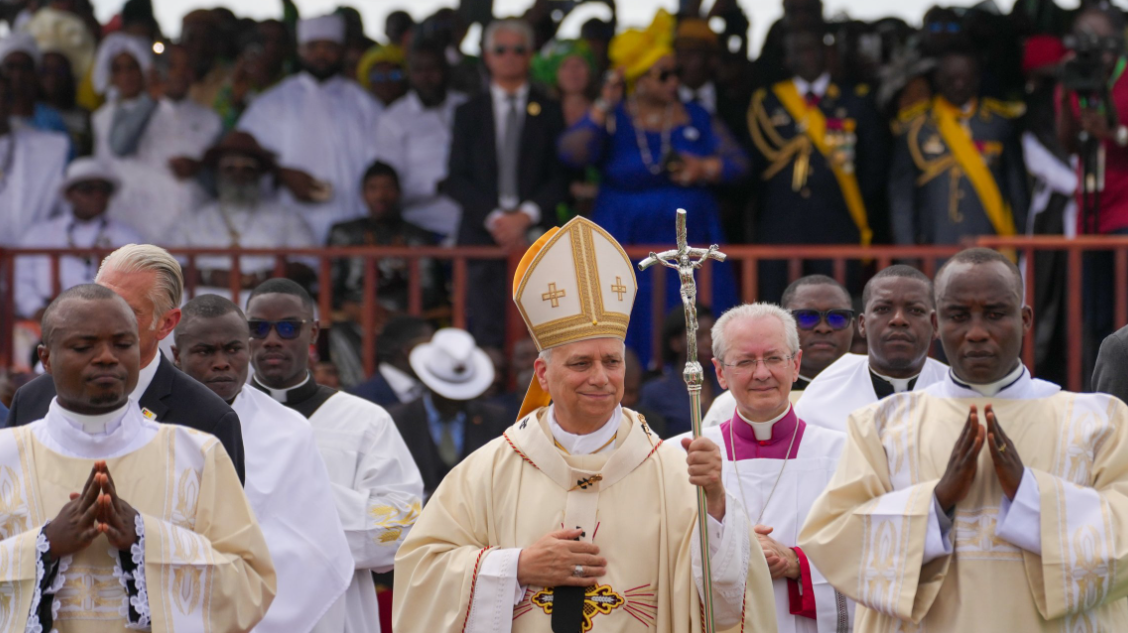
Pope Leo XIV completed his 11-day trip over Africa on Thursday, which took him to Algeria, Cameroon, Angola and Equatorial Guinea from April 13-23. By doing so, he aimed to bring more attention to Africa, where roughly 20% of the world’s Catholics live. The visit, Leo’s first to Africa since his ascension to the papacy last May, came with speeches calling out rampant corruption of African leaders, resource exploitation and poverty on the continent. During the tour, Leo established himself as someone insistent on calling out injustice, after previously being viewed as more soft-spoken.
Algeria holds personal significance to Leo, being the birthplace of his spiritual father, St. Augustine of Hippo. Contrary to the other three nations, Algeria has a much smaller Christian population, in fact, 98% of the population consists of Sunni Muslims. Thus, Leo became the first pope to visit the country. The nation is recovering from a dark colonial past: in December, Algeria denounced France’s former 132-year colonization. In his trip, Leo emphasized Christian-Muslim harmony, honoring 19 Catholic martyrs who died fighting in Algeria’s bloody civil war in the 1990s. However, the pontiff avoided mentioning the nation’s persecution of Christians, as 58 Protestant churches have been shut down by the government since 2006.
Additionally, Cameroon has been embroiled in a war since 2016, after police violently responded to peaceful protests surrounding the nation’s mistreatment of English-speaking citizens. Consequently, separatists emerged, fighting a war to gain independence and establish a new nation known as Ambazonia. The conflict, known as the Anglophone crisis, has killed more than 6500 people. Furthermore, Cameroon’s President, Paul Biya, faces massive controversy after winning an eighth term last October. 92-year-old Biya is currently the world’s oldest head of state, and his reelection would keep him in power shortly before he reaches 100. During his visit, Leo was not deterred from criticizing authority, asserting that “a handful of tyrants” were ravaging the world; in addition, he addressed the country’s widespread wealth inequality.
Angola still feels the scars of the trans-Atlantic slave trade, where 5 million enslaved people were shipped from the nation. The pontiff visited the Sanctuary of Mama Muxima in his time here, originally built by the Portuguese to baptize Africans before they were shipped abroad. The visit was especially important for Black Catholics, many of whom became Catholic due to the slave trade. Still, the country’s population suffers from financial inequality and a lack of education and healthcare.
Equatorial Guinea marked the pope’s final destination in his trip. Similar to Cameroon, the small nation’s president is full of controversies. 80-year-old Teodoro Obiang Nguema Mbasogo won re-election in 2022, continuing his reign as the longest-serving head of state in the world after he first gained power in 1979. In January, Obiang moved the nation’s capital to Ciudad de la Paz, despite criticism that it would lead to more inequality. Furthermore, the nation’s regime faces accusations of corruption (in 2021, France convicted the vice president, Obiang’s son, of embezzling public funds). Equatorial Guinea has also accepted deals with the U.S. to accept deported immigrants. Instead of the corruption, Leo focused on the human rights violations and exploitation of natural resources. To conclude his tour, he visited a prison and extolled the value of hope to inmates.
Pope Leo’s tour was partly overshadowed by his continued standoff with President Donald Trump regarding issues such as the ongoing Iran war, which Leo has spoken against. During the trip, Trump continued to argue against him; in return, the pontiff expressed that he prefers to focus on peacebuilding rather than debating.
Pope Leo has been more reserved compared to his fiery predecessor Pope Francis. However, upon his return from the tour, many have said that Leo has “found his roar.” Despite many seeing his visit as symbolic, it is clear that the pope’s presence has brought unity across Africa, calling out long-lasting issues and spreading messages of love and hope for all.
Read more here: