
Jack Zhou — May 12, 2026
Reform’s Sweep
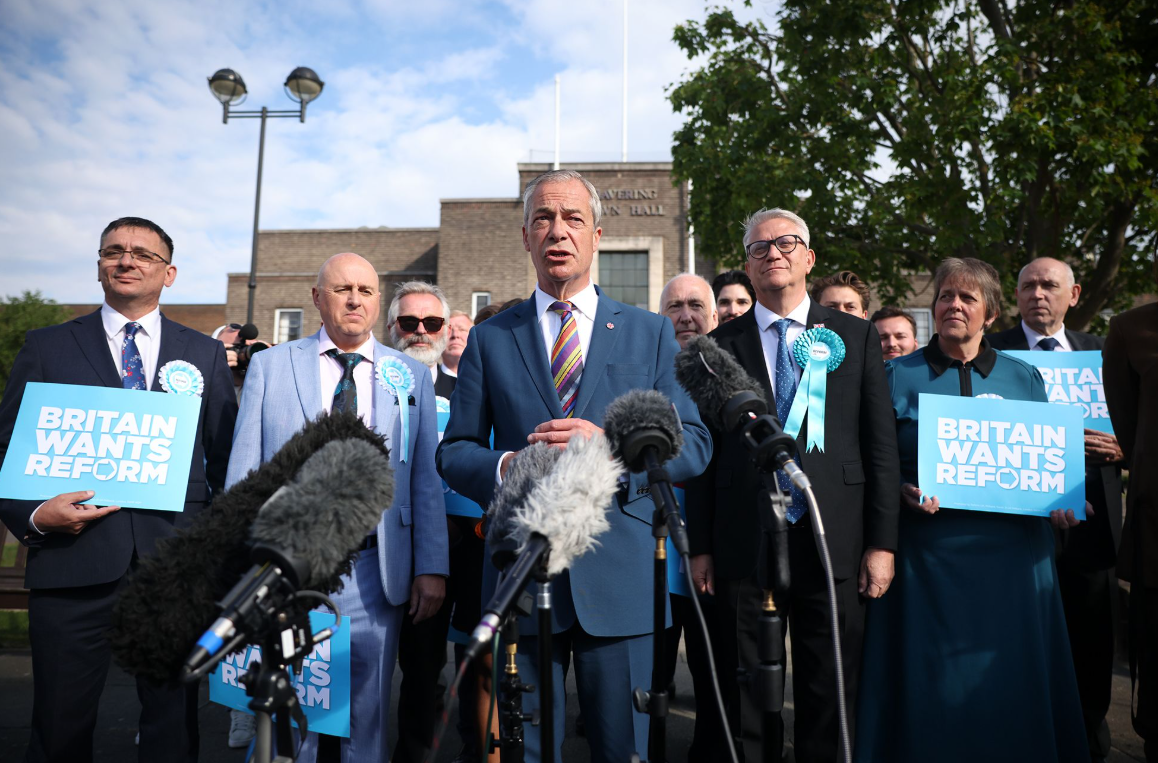
On May 7, the United Kingdom held local elections across 136 English councils, six mayoral races, and simultaneous votes for the Scottish Parliament and Welsh Senedd. The results were devastating for the two parties that have dominated British politics for over a century. Nigel Farage’s hard-right Reform UK gained around 1,400 council seats while Labour shed more than 1,000 and the Conservatives lost over 400. Reform seized councils in traditional Labour strongholds like Sunderland and Newcastle-under-Lyme while simultaneously toppling Conservative heartlands like Essex–a feat that underscored the scale of its realignment. Farage declared the outcome “a truly historic shift in British politics,” vowing that the era of Labour-Conservative dominance was over.
Starmer Under Fire
Despite rising pressure, Prime Minister Keir Starmer has refused to resign, calling the results “very tough” but insisting “I’m not going to walk away.” In light of Labour’s national vote share collapsing to just 15% against Reform’s 27%, several Labour MPs called publicly for his departure, and trade unions–including the Transport Salaried Staffs Association–compared his position to Joe Biden’s ahead of 2024, warning Labour was paving the way for a Farage government. Starmer’s survival may hinge on the absence of a ready successor, with rivals like Andy Burnham and Angela Rayner both sidelined.
Wales and Scotland
The scale of Labour’s collapse extended far beyond England. In Wales, a country Labour has dominated for a century, Plaid Cymru replaced Labour as the leading party in the Senedd, and First Minister Eluned Morgan lost her own seat. In Scotland, the SNP retained control of Holyrood but fell short of a majority, while Reform made inroads on the regional list. The Institute for Government warned that all three devolved nations will now simultaneously have nationalist first ministers, raising renewed pressure on Westminster over both Scottish independence and Welsh autonomy.
The Bigger Picture
These results are being read as more than a midterm rebuke. As Tony Travers of the London School of Economics told TIME, Reform has now proven it can win across practically every kind of constituency in England, a feat that repositions it as a genuine governing force, not merely a protest vehicle. The next general election is still up to three years away, but Thursday’s results suggest Britain is heading toward a hung parliament or a fragmented result without modern precedent.
Read more here:


