Dhruv Arun — June 9, 2026
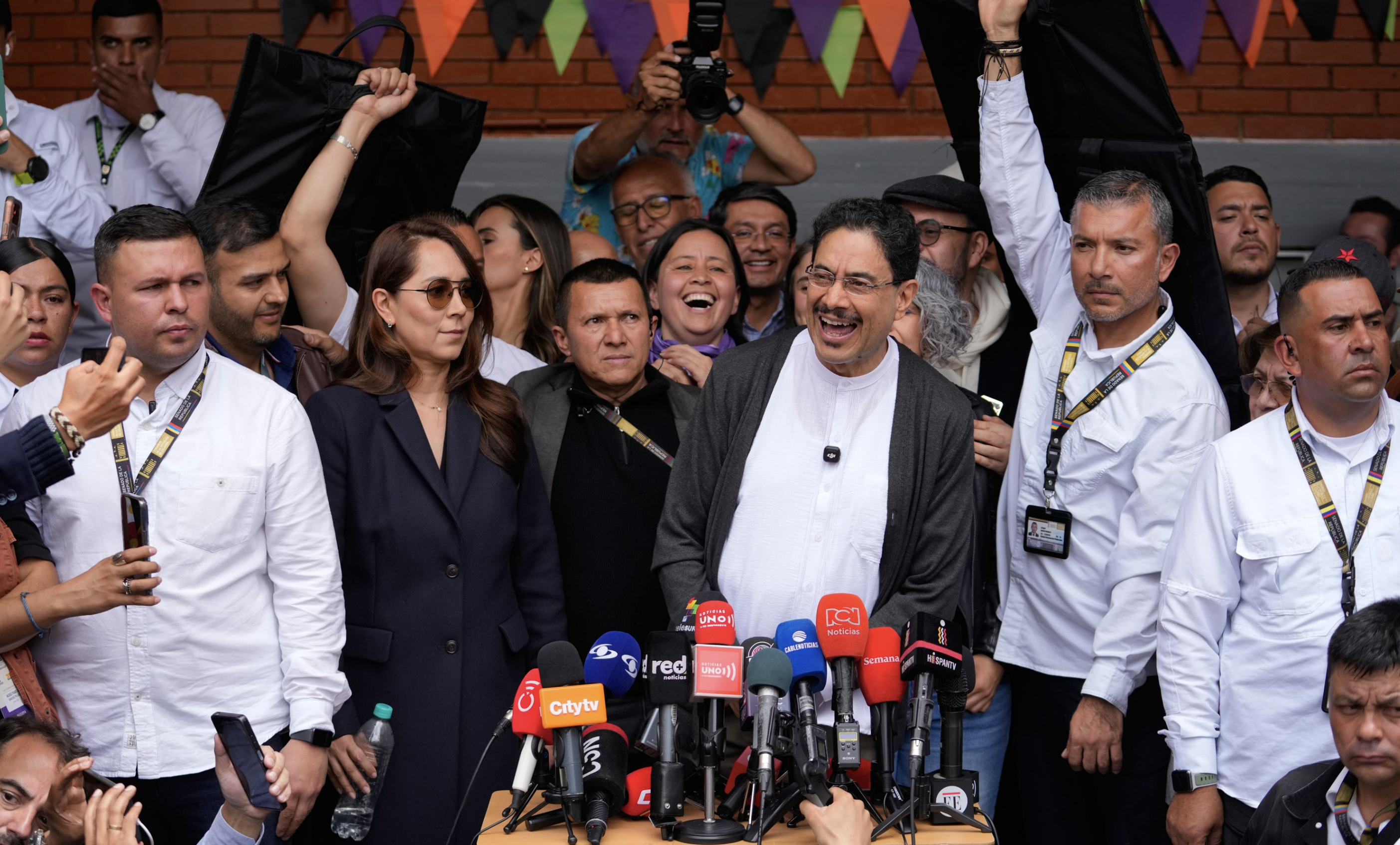
Colombia’s heated presidential election headed to a runoff on Sunday, preliminary official results displayed, as a far-right candidate advanced in what could herald another gain for the right-wing wave sweeping elections across Latin America. Colombian voters sent a clear message on Sunday: the country is polarized and divided. With all of the votes counted, results released by Colombia’s national civil registry revealed an electorate split down the middle.
Right-wing lawyer Abelardo De La Espriella will face left-wing candidate Ivan Cepeda on June 21 in a presidential runoff in Colombia, after Cepeda on Sunday belatedly acknowledged his defeat in the first round of voting. De La Espriella of the Defenders of the Homeland movement, who presents himself as a political outsider, won 43.7% of the votes, while Cepeda reached 40.9%, after the counting of all polling station ballots was completed. Because neither candidate had more than 50 percent of the vote, a runoff will be held on June 21.
The runoff is also becoming a broader judgment on the presidency of Gustavo Petro and the direction Colombia has taken over the last four years. In many ways, the vote was a referendum on the legacy of the departing president. His term was defined by the historic representation of Indigenous, Afro-Colombian and L.G.B.T.Q. communities, but also by a stalled legislative agenda, digressive public speeches, and a rocky relationship with Donald Trump. Petro’s economic and security policies have suppressed new foreign investment. One clear message from the first round is that anti-Petro sentiment is aligned behind de la Espriella.
That frustration helped fuel the rise of a candidate who built his campaign around public anger over crime, insecurity, and political distrust. Mr. De La Espriella, whose rise came late in the campaign, resembles a new breed of flashy populist leaders in Latin America, like El Salvador’s Nayib Bukele, who share President Trump’s hard-line approach to crime and have pledged to apply it to drug traffickers. De la Espriella, known as El Tigre, has campaigned on a conservative message of law and order with his experience in business rather than politics a positive in his campaign. The first-round results suggest that security and governance concerns have become the primary drivers of voter behavior.
He also capitalized on widespread security concerns, promising to crack down on the armed groups and gangs that many Colombians say have made extortion a fact of life. De la Espriella’s strong performance indicates that a significant share of the electorate is receptive to a tougher approach toward crime, armed groups, and narcotrafficking. The 47-year-old has promised he will be tough on crime, tackling drug trafficking, illegal armed groups and building 10 megaprisons. In a seeming nod to Mr. Bukele’s prison system in El Salvador, Mr. De La Espriella pledged to build 10 maximum-security prisons in the jungle.
Mr. Cepeda, 63, is a staunch ally of Mr. Petro’s who ran on a platform of continuity and a promise to defend victims of the country’s armed conflicts, as well as the poor. Cepeda, for his part, presents himself as offering continuity with the Petro government, with a message of inclusion, peace, and justice. Cepeda has pledged to expand the current government’s social programs to reduce poverty and inequality, and promote dialogue with illegal armed groups. Cepeda’s competitiveness showcases that the support for the government’s political project is still strong, reinforcing the idea that voters are divided over different approaches to Colombia’s security and economic issues.
The first round confirmed the extreme polarization of this electorate, though not in a wholly unexpected way. Voter turnout was also significant, reaching nearly 58 percent, about three percentage points higher than four years ago. This should be interpreted as a sign of democratic resilience in Colombia, but it also shows deep political anxiety. On one hand, voters were convinced that Cepeda’s victory would entrench a left-wing political project leading Colombia toward a Venezuela-style catastrophe. On the other hand, voters were deeply concerned that a de la Espriella presidency would dismantle hard-won progressive gains and solidify a hardline approach to politics.
Looking ahead to the runoff, the information environment is likely to become even more polarized. Narratives about electoral integrity, media bias, and public security are expected to intensify as both campaigns seek to mobilize supporters and win over undecided voters. For Washington, the election will be a key indicator of whether Colombia remains aligned with a regional trend toward tougher security policies and closer cooperation on counternarcotics, migration, and organized crime, or whether it reinforces continuity with the current administration’s priorities.
Read more here:
- Annie Correal, Genevieve Glatsky, and Luis Ferré-Sadurní – New York Times
- Luis Jaime Acosta – Reuters
- Staff – Atlantic Council
Extemp Analysis by Dhruv Arun
Question: Will Colombia’s presidential runoff deepen political polarization in Latin America?
For this question in particular, you want to stay focused on POLARIZATION in Latin America, not just the Colombian election itself. The speech should revolve around what the election represents regionally and politically. Don’t just explain the candidates. Explain why this runoff reflects broader trends happening throughout Latin America.
AGD
This question gives you a lot of flexibility. You could joke about how modern elections are becoming less “left vs right” and more “who thinks the other side will destroy the country first.” You could also do something more serious about how voters increasingly see elections as existential fights instead of policy debates that could better their lives. Or even talk about someone who has suffered because polarized elections are not giving them what they need, as in they don’t have as much representation.
BG
Explain Colombia’s runoff election → Explain who De La Espriella and Cepeda are → Explain the broader rightward shift and collapse of moderate politics in Latin America and Columbia → Explain how its led to polarization
DEFINE POLARIZATION. Is polarization just political disagreement? Or is it when voters increasingly move toward ideological extremes and stop trusting compromise, institutions, and opposing sides?
SOS
You should make the SOS revolve around the idea that extreme polarization can stop governments from truly representing ordinary people
I’d answer like this:
Yes, because Colombia’s runoff reflects polarization through 3 major shifts
Rise of anti-establishment politics
As frustration grows over corruption, economic dissatisfaction, and distrust in existing institutions, voters are abandoning traditional parties for outsider candidates who promise dramatic change and attack political elites.
Security-driven politics
As many people increasingly prioritize safety, order, and crackdowns on armed groups over moderation and compromise, crime and instability are pushing voters toward more aggressive and extreme political movements.
Collapse of the political center
Moderate politics are weakening as elections become ideological battles instead of policy debates, causing voters to increasingly see the opposing side as a threat to the country’s future rather than just a political opponent which makes them go further to their side.