Siyona Biswas & Janelle Lee — July 7 , 2026
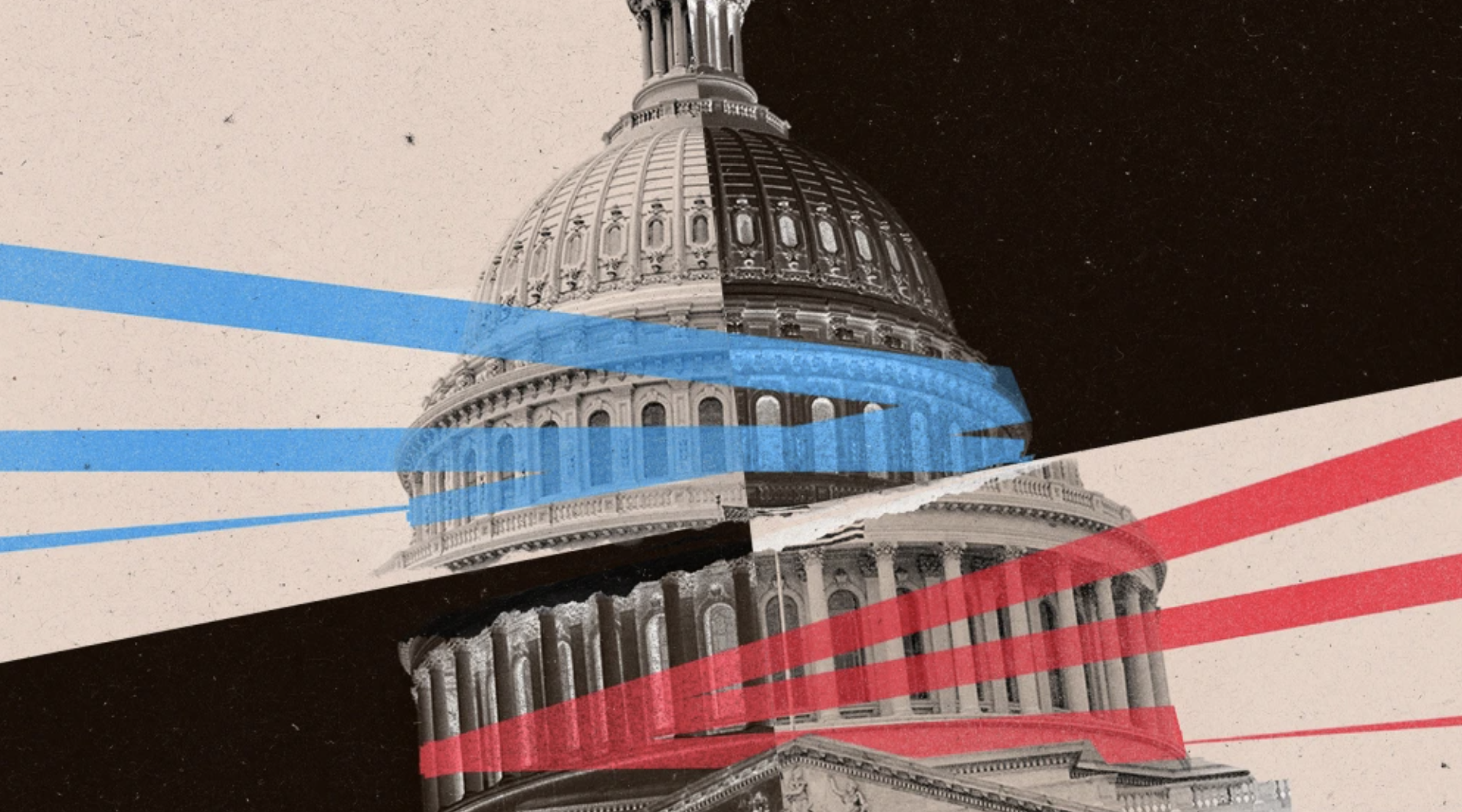
The 2026 midterm elections are shaping up to be one of the most consequential congressional cycles in modern American history. Following the highly contentious 2024 presidential election and the return of President Donald Trump to the White House, the United States finds itself more politically polarized than at any point in recent decades. Deep divisions over economic policy, immigration, executive authority, foreign affairs, and the role of government have created an environment in which compromise has become increasingly rare. Rather than serving as routine elections that occur halfway through a presidential term, the 2026 midterms are widely viewed as a referendum on the direction of the nation itself.
Historically, midterm elections serve as a mechanism through which voters evaluate the performance of the sitting president. The party occupying the White House frequently loses congressional seats as dissatisfied voters seek to impose limits on executive power. However, the political stakes in 2026 extend beyond the traditional midterm backlash. With congressional majorities remaining exceptionally narrow and political institutions increasingly strained by partisan conflict, even a handful of races could dramatically alter the balance of power in Washington. The outcome of these elections will determine whether the Trump administration faces significant congressional oversight and legislative resistance or gains a more favorable environment for advancing its policy agenda.
At the same time, the election is occurring amid broader transformations in the American electorate. Population shifts, suburban realignment, changing voting patterns among minority communities, and generational divides have fundamentally reshaped the political map. These developments have weakened traditional assumptions about which states and districts securely belong to either party. As a result, both Republicans and Democrats enter the 2026 cycle facing opportunities and vulnerabilities in regions that would have been considered politically predictable only a decade ago.
Therefore, understanding the 2026 midterms is more nuanced than national polling averages or presidential approval ratings. The election will be determined by a complex interaction of demographic changes, candidate quality, local issues, and ideological struggles occurring within both major political parties. From redistricting battles in state courts to heated Senate primaries and high-stakes gubernatorial contests, the path to congressional control runs through a diverse collection of political battlegrounds.
Midterm Headwinds
Although national media attention frequently focuses on campaign rallies, candidate controversies, and polling data, some of the most important forces shaping the 2026 midterms operate largely behind the scenes. Congressional redistricting and gubernatorial elections, two key forces in the coming election, often determine electoral outcomes before voters cast their ballots.
→ REDISTRICTING
One of the most significant factors influencing House elections is the ongoing impact of redistricting litigation. While congressional maps are typically redrawn following each decennial census, legal challenges concerning racial representation, partisan gerrymandering, and voting rights have forced several states to revisit their district boundaries ahead of the 2026 election cycle. Courts in states across the South and Midwest have reviewed district maps that opponents argue unfairly advantage one party or dilute the voting strength of minority populations. These legal disputes have created uncertainty for candidates and altered their campaign strategies.
The consequences of redistricting are bigger than the map adjustments that occur. Gerrymandering, the act of manipulating maps to serve the needs of redistricting authorities, has come under intense scrutiny. Congressional boundaries determine which voters are grouped, influencing electoral competitiveness and representation. In many states, both parties have sought to maximize their advantages by drawing districts that insulate incumbents and minimize competition. As a result, the number of truly competitive House districts has steadily declined, contributing to greater political polarization. Candidates increasingly worry about structural challenges rather than general election opponents, encouraging more extreme positions and reducing incentives for bipartisan cooperation.
→ GUBERNATORIAL RACES
At the same time, gubernatorial races play a crucial yet often overlooked role in shaping congressional outcomes. Governors influence election administration, appoint key officials, sign voting legislation, and mobilize voters within their states. Strong gubernatorial candidates can generate turnout that benefits down-ballot candidates from the same party, creating ripple effects throughout congressional races. In competitive states, these turnout advantages can prove decisive in close House and Senate contests.
The upcoming gubernatorial elections have formative consequences. Governors elected in 2026 will remain in office during critical political developments that may include future redistricting disputes, election law reforms, and preparations for the 2028 presidential election. Their decisions regarding voting procedures, administrative appointments, and legislative negotiations may influence the political landscape long after the 2026 midterms have concluded. Accordingly, gubernatorial races are investments in future political power.
→ APPROVAL RATINGS
Although there is much that distinguishes the 2026 midterms from its predecessors, it comes as no surprise that the elections will be heavily shaped by public perceptions of the sitting president. Throughout American history, voters have frequently used midterm elections to express dissatisfaction with the party controlling the White House. Presidents from both parties have experienced significant congressional losses when public confidence declined, making approval ratings one of the strongest indicators of electoral performance. Take a look at the results of the 2018 midterms amidst Trump’s first term, most notably the control of the U.S. House of Representatives. Democrats gained control of the House and Republicans just narrowly held the Senate.


For President Trump, the political environment presents substantial challenges. Economic uncertainty remains a major concern among voters, particularly regarding inflation, gas prices, housing affordability, the US-Iran war, and trade policy. While supporters credit the administration with pursuing aggressive economic nationalism and prioritizing domestic industry, critics argue that tariffs and market instability have contributed to financial uncertainty for businesses and consumers. These competing narratives have created a highly contested debate over economic stewardship.
Beyond economic concerns, the administration continues to generate controversy through its extensive use of executive authority. Supporters view executive action as necessary to overcome congressional dysfunction and implement campaign promises. Opponents, however, argue that expanded executive power undermines institutional checks and balances. This debate has transformed many congressional races into broader arguments about the concentration of political power and the proper role of Congress within the federal government.
The battle for congressional control reflects these broader national tensions. Republicans currently maintain an advantage in the Senate due to the geographic distribution of seats up for election. Democrats, however, appear to possess stronger opportunities in the House of Representatives, where numerous competitive districts are located in suburban regions that have trended away from Republicans in recent election cycles. This creates the possibility of a divided Congress, in which different parties control different chambers, potentially leading to legislative gridlock and heightened political confrontation.
Wedge Issues
While candidate personalities and reputations are noteworthy for voters, decisions are ultimately shaped by substantive policy concerns. Across the country, conflicting views on the following topics may determine midterm success.
→ IMMIGRATION
Immigration remains a defining issue. Increased attention to border security, asylum policy, and federal enforcement has energized Republican voters while creating divisions among Democrats regarding the appropriate balance between security and humanitarian concerns. The issue is particularly influential in border states and suburban communities where immigration has become closely tied to broader debates about national identity and government effectiveness.
→ HEALTHCARE
Healthcare continues to play an important role, especially among older voters and working-class families. Rising medical costs, prescription drug prices, and access to care remain persistent concerns that candidates from both parties seek to address through competing policy proposals. Similarly, reproductive rights remain politically significant following the Supreme Court’s Dobbs decision, with Democrats continuing to mobilize voters around abortion access while Republicans emphasize state-level decision-making and broader cultural issues.
→ FOREIGN POLICY
Foreign policy has also emerged as a growing concern. Ongoing conflicts abroad, competition with China, military spending, and international trade relationships have become increasingly important components of campaign messaging. Candidates must balance domestic priorities with voter concerns regarding America’s role in an increasingly unstable global environment.
Key Races
→ TEXAS
No race better illustrates the internal tensions within the Republican Party than the Texas Senate contest. President Trump’s endorsement of Attorney General Ken Paxton over longtime Senator John Cornyn transformed what might have been a routine reelection campaign into an uphill battle that endangers the future of conservatism. The race reflects a broader struggle between the party’s traditional institutional wing—represented by Cornyn’s decades of legislative experience and establishment relationships—and a populist, Trump-aligned movement that increasingly prioritizes loyalty and confrontation over seniority or governing experience.
Paxton enters the race carrying an unusually extensive record of legal and ethical controversies, including a long-running securities fraud indictment that was ultimately resolved through a plea agreement, multiple federal investigations, an unprecedented impeachment by the Texas House, and widely publicised personal scandals that include alleged adultery. Yet, his primary victory demonstrates that, for many Republican primary voters, alignment with Trump’s political agenda outweighed concerns surrounding personal ethics or electability.
Because Texas has historically served as a Republican stronghold, the competitiveness of this race has attracted enormous national attention and fundraising. Democrats view the race as one of their strongest pickup opportunities. Much of that optimism centers on State Representative James Talarico, who has emerged as one of the party’s most recognizable figures in Texas through his emphasis on public education, voting rights, and messages that combine progressive policy with overt appeals to faith and bipartisanship. Unlike many national Democrats, Talarico frequently frames progressive priorities through religious and moral language, an approach designed to resonate with moderate and independent Texans while challenging Republican claims over values-based politics. Talarico hopes to wield Paxton’s polarizing profile against him, and rapid demographic changes and continued Democratic gains in metropolitan areas could produce one of the most competitive Senate races in quite some time. Whether Democrats ultimately capitalize on that opportunity will depend on their ability to expand beyond urban strongholds while persuading moderate suburban and independent voters that concerns surrounding Paxton’s controversies outweigh long-standing Republican voting habits.
→ NEW YORK
In New York, progressive candidates backed by Mayor Zohran Mamdani have picked up several primary wins, highlighting the accelerating influence of democratic socialist politics within urban Democratic coalitions. These campaigns demonstrate a broader realignment in which younger activists increasingly prioritize economic reforms, such as expanded public housing, stronger tenant protections, public ownership, expansion of certain municipal services, wealth taxation, and more expansive social welfare programs, over the incremental policy approach traditionally favored by Democrats.
Democratic socialist campaigns rely heavily on grassroots volunteer networks, small-dollar fundraising, labor unions, tenant organizations, and neighborhood-level canvassing rather than traditional donor coalitions. Their victories suggest that progressive candidates are increasingly capable of translating activist energy into electoral success, particularly in safely Democratic urban districts where partisan competition is a secondary concern to policy.
Beyond individual races, Mamdani-backed candidates represent a generational shift within Democratic politics. Many frame their campaigns around the rising cost of living, housing affordability, labor rights, climate policy, and reducing corporate influence, arguing that the Democratic Party should move beyond technocratic governance toward more transformative economic change. Regardless, increasingly visible tensions between the party’s progressive grassroots and its more moderate national leadership have formed.
→ OHIO
On November 3rd, 2026, Ohio will hold a special election aimed specifically towards filling the vacant Senate seat that former Senator J.D. Vance left behind to become vice president. This will be one of two special elections held on the 3rd, with the other occurring in Florida to replace Secretary of State Marco Rubio. The two respective nominees in Ohio are Jon Husted and former Democratic senator, Sherrod Brown. As the race between Democrats and Republicans is extremely close, this specific election holds a leading role in determining which party will control the Senate for the remainder of Trump’s term. Recent polls show that the two representatives are near even, with Husted potentially possessing a slight lead.
Husted, the Republican representative, supports many of Trump’s policies. Namely, he aims to extend the Trump tax cuts, reduce regulations, and encourage business investments. He believes that lower taxes would boost job growth in the US. Similarly, he supports Trump’s increase in deportations and more market-based solutions to healthcare concerns. His ideology is known for being very closely aligned with Trump and the Republican agenda, and he has promoted his pragmatic decision-making. However, critics argue that he should be charged with wrongdoing for the House Bill 6 scandal, though the accusations facing Husted were alleged.
The Democratic representative, Sherrod Brown, is known as a “working class populist” and built his political career around higher wages, labor unions, pension protection, and other policies with similar ideologies. A unique aspect about Brown is that he opposes certain Democratic trade policies, such as NAFTA, with such denials granting him popularity among many blue-collar voters in Ohio. His main advocacies, however, lie in healthcare. Brown strongly supports strengthening the Affordable Care Act, lowering drug prices, and preserving Medicare and Medicaid. Despite strengths in these areas, an issue that many people have found with his policies is his support of larger federal government interventions, such as expanded domestic welfare programs.
Although this election is primarily recognized as important due to its power to affect the balance in the Senate, the election may also indicate whether Ohio will continue to be a red state or convert back into a swing state. Still, on a national level, changes in Senate balance have the potential to affect policies for the next two years, determining which party is able to have more of their policy goals realized.
→ MAINE
Susan Collins, a nominee of the Republican party, is seeking a sixth term in the 2026 Senate election in Maine. She is one of the few moderate Republicans that remains in the Senate, and has represented the state since 1997. Collins also has a history of crossing party lines, particularly at crucial times. For example, Collins voted against repealing the Affordable Care Act in 2017 and voted to convict President Trump after his second impeachment trial, which concerned the January 6th insurrection. Due to her frequent bipartisan voting patterns, many Maine voters view her as an independent rather than a Republican senator.
As Susan Collins’ popularity has declined among members of both political parties, Maine Democrats have viewed the upcoming midterm elections as an opportunity to gain additional Senate seats. This objective, however, has been complicated by Collins’ Democratic challenger, Graham Platner. While Platner has gained popularity due to his progressive economic proposals, his campaign has been greatly overshadowed by his past sexual scandals, with several women accusing him of sexual assault. These controversies have caused top Democrats to pull their endorsements of his campaign. Due to intense partisan pressure, Platner is set to drop out, giving Democrats time to replace him.
While Platner has been able to mobilize support for his campaign through progressive policy promises like universal healthcare, anti-corruption measures, higher taxes on large companies, and increased investments in working families, it is unclear whether a new Democratic candidate would carry these same ideals. Platner’s decision to suspend his campaign is likely to further complicate an already tightly-contested Congressional race. Whether Democrats or Republicans gain a seat in the Senate will likely depend on who Democrats choose to replace Platner and go up against Collins in the general election.
→ GEORGIA
The Georgia election will be between Democratic senator, Jon Ossoff, and the Republican challenger, Mike Collins. While Ossoff is the incumbent, his seat is one of the most vulnerable in the Midterm elections. Currently, Republicans hold a 53-47 Senate majority, so losing a seat in Georgia could make it more challenging for the Democratic Party to win a majority in the Senate. Furthermore, Georgia is highly competitive, has changing demographics, and remains a true swing state. Both parties have invested large amounts of money in Georgia campaigns, as the election is viewed by some sources as the most important election of the midterms.
Senator Ossoff is currently advocating for lower costs for families, increased manufacturing and infrastructure investments, protection of the Affordable Care Act, immigration reform, tax relief for middle class families, and increased taxes on large corporations. Collins, on the other hand, is an avid supporter of the Republican Party and Trump; he aims to extend Trump’s tax cuts, expand domestic energy production, increase market competition, oppose “government-run healthcare,” finish the border wall and increase deportations, and maintain low taxes.
Ossoff has structured his campaign around appealing to working families, lowering drug costs, fighting government corruption, and protecting voting and reproductive rights. Currently, Jon Ossoff is projected to retain his seat, as analyzed by Pollsmax. The current senator holds a 6% lead, due to a vast fundraising advantage and his status as an incumbent. However, due to Georgia’s swing state nature, the race remains highly competitive and could still shift either way.
→ NORTH CAROLINA
In June 2025, Republican Senator Thom Tillis stated that he would not seek reelection in North Carolina, leaving the seat open. The current leading candidates are Roy Cooper for the Democratic party and Michael Whatley for the Republican party. Many view this election as an additional opportunity for Democrats to flip a previously Republican seat, giving them an advantage in the Senate.
Roy Cooper, the Democratic representative, is considered a strong candidate in North Carolina. He has served as governor, the state’s attorney general, and has won six statewide elections thus far. Cooper’s campaign slogan is “Make Stuff Cost Less,” and he has continuously emphasized the importance of lowering everyday costs for families. Similar to other Democratic representatives, Cooper opposes cuts to Medicaid and has defended the Affordable Care Act. The former governor also aims to create more job openings and has highlighted his intentions to work with President Trump when their motives align, taking on a more independent role. Cooper is currently the favorite to win the seat in the general election.
Whatley, on the other hand, is the former chair of the Republican National Committee and the North Carolina Republican Party. His interests align very closely with President Trump’s; he supports increased border security, making Trump’s tax cuts permanent, reducing regulations on businesses, reducing “soft-on-crime” policies, and expanding military strength. Whatley is very supportive of Trump’s foreign policy priorities, and has a more aggressive approach towards conflicting countries, such as Iran and China.
Conclusion
The 2026 midterm elections constitute a unique national referendum on presidential leadership, economic performance, institutional trust, and competing visions for the future of the United States. Every major trend shaping modern American politics—from demographic transformation and polarization to executive power and electoral reform—converges within this election cycle.
The races themselves reveal a nation experiencing profound political change. Internal conflicts within both parties continue to reshape candidate selection and policy priorities, while demographic shifts create new opportunities and vulnerabilities across the electoral map. Structural factors such as redistricting, gubernatorial authority, and election administration further complicate an already volatile political environment.
Ultimately, the outcome of the 2026 midterms will influence not only the final years of the Trump presidency but also the trajectory of American politics heading into the 2028 presidential election. Now, power lies in the hands of voters. Whether they choose a divided government, unified Republican control, or a Democratic resurgence, the decisions made in the upcoming elections will shape the future direction of the nation for years to come.
Read more here:
- Fred Lewsey, University of Cambridge
- Alicia Bannon, State Court Report
- Daron Shaw and John Petrocik, National Affairs
- Nicholas Fandos, The New York Times
- Alejandro Serrano, The Texas Tribune
- Stephen Fowler and Claudia Grisales, NPR
- Supreme Court of the United States
- Kyle Davidson, News from the States
- Holden Lipscomb, Independent Center
- David Bass, Carolina Journal
- Andrew Stanton, Newsweek
- Staff, Al Jazeera
- Caroline Soler, New York Times
- Kurt Knue, WLWT5
- Kate Lurie, Brennan Center
- Paul Steinhauser, Fox News
- Stoddart and Demissie, ABC News