Clark Hazard — August 4, 2026
Democratic socialism has made headlines across cable news networks and political conventions in recent months. Candidates backed by the movement have led significant upsets in Democratic primaries, ousting high profile incumbents across the nation. The victors hope to join the likes of Bernie Sanders, Zohran Mamdani, and Alexandria Ocasio-Cortez (AOC) as elected officials fighting for a democratic socialist agenda.
As democratic socialist candidates continue to become frontrunners in political races across the country, it is important to examine the propulsion of democratic socialism into the mainstream political sphere and explore its implications on American politics.
Background
The ideology of democratic socialism took hold in 19th century Germany, when fighters for the working class rejected Marxist ideals of revolution and instead focused on enhancing participation in political systems and achieving collective ownership of corporations by working people. Doing so peacefully, and without overthrowing capitalism, is what fundamentally differentiates the ideology from traditional socialist and communist ideologies.
Another important distinction is between democratic socialism and social democracy. Social democracy shares many of the same short term goals as democratic socialism, but is purely focused on regulation of a fully intact capitalism, whereas democratic socialism strives to shift private institutions into public ownership.
Democratic Socialism in America
In the United States, democratic socialists began to push for a heavily regulated economy managed by a strong democratic government. For decades, the Socialist Party ran independent national candidates, who peaked in support during the 1912 election with 6% of the vote. Despite the lack of federal success, the party did receive minor victories in local races. Momentum eventually slowed and factions appeared in the socialist coalition, with the most prominent being led by Michael Harrington, a political activist. He formed the Democratic Socialist Organizing Committee (DSOC) which pioneered the strategy to abandon third party bids and run in democratic primaries “as far left as possible” to win over the new deal coalition and gain mainstream political influence. By 1982, he formed the Democratic Socialists of America (DSA), which is still the dominant political organization for the coalition.
During the 1990s, the collapse of the soviet union delegitimized socialism around the world and lessened left wing organization within the United States. During this period, President Clinton reshaped the Democratic Party, forming a coalition of “New Democrats” focused on fiscal conservatism and corporate-friendly policies. Democratic socialists found it increasingly difficult to operate within the party and as a result, membership in the DSA dropped to just 5,000 individuals nationwide.
The movement fell into obscurity until the 2008 financial crisis caused the Millennial generation to enter the worst labor market since the Great Depression. Opportunities for post-secondary graduates declined rapidly, forcing students into debt. At the same time, the government used taxpayer money to bail out corporations, which started the Occupy Wall Street movement. The result was heightened class consciousness, bringing wealth inequality to the forefront of political conversation. The 99% vs the 1% framework established by the movement enhanced macroeconomic discontent towards billionaires and corporations and laid the groundwork for left wing populism. The anti-establishment sentiment and refusal to work with legislators by the Occupy Wall Street movement eventually led to its demise due to a lack of political influence, but those involved were invigorated to inspire change in the United States political system and decided to re-engage with the state by supporting grassroot political organizations and populist campaigns.
Bernie Sanders’ Influence
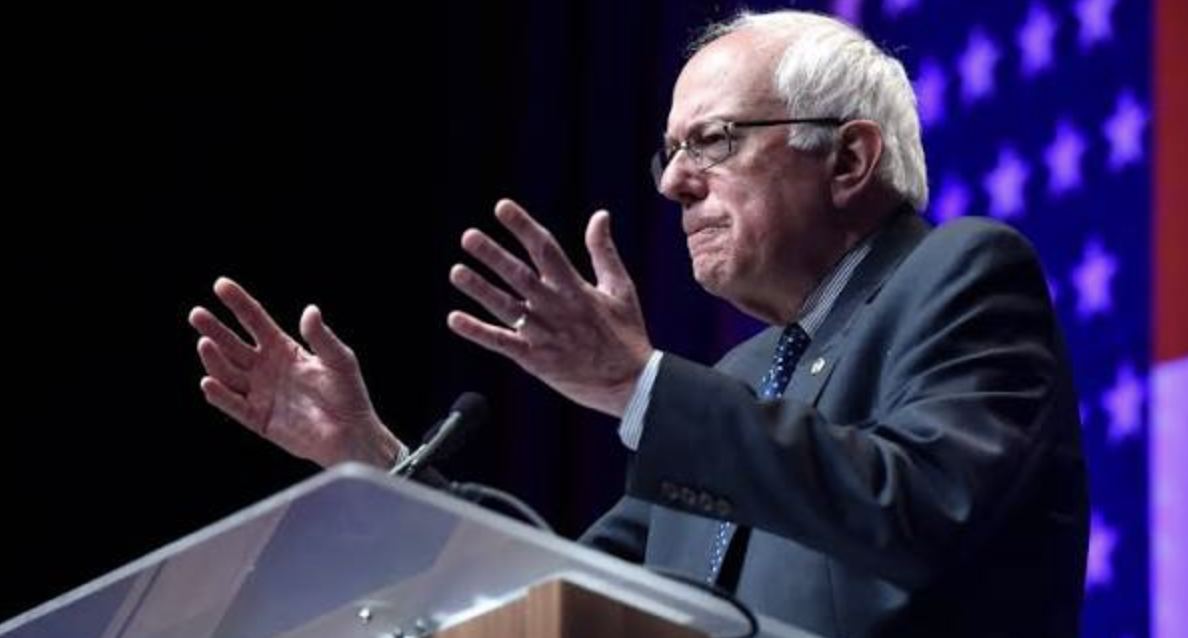
The participation of Occupy activists in politics, and of democratic socialists within the Democratic Party culminated in Bernie Sanders’ bid for the Democratic nomination for president in 2016. The Senator from Vermont ran on an openly democratic socialist platform. He redefined what socialism meant to Americans, explaining that it simply meant creating an economy that works for everyone —not just billionaires. The reframing of the term within the American zeitgeist ended its status as a campaign-ending qualifier.
Discontent with the Obama administration’s incremental change and willingness to bail out corporations during the financial crisis led many progressive and socialist democrats to be extremely disappointed with the administration they had fiercely campaigned for in 2008. Hillary Clinton, who was seen by the party establishment to be the de facto presidential nominee in 2016, was perceived as the continuation of a neoliberal agenda for the United States. By that point, faith in the government was at its lowest in decades, with just 20% saying they could trust the government to do what is right all or most of the time.
The culmination was an environment fit for populism. Sanders’ positions, meant to garner tangible benefits like affordable healthcare for all citizens, appealed to those disillusioned with systemic inequalities perpetrated by the establishment Democratic Party and the government as a whole. His positions were fiercely attacked by the Democratic establishment, which only made them more popular. Fundraising serves to showcase how passionate many working people were during Sanders’ campaign. He raised $229 million during the primary with an average donation of just $27. This momentum proved that democratic socialism could thrive on a large scale, despite the lack of establishment or corporate support. Sanders’ emerged victorious in 23 primaries and received 43% of the vote, far more than any political analyst predicted. While he was never elected to national office, Sanders continues to advocate for policies like Medicare for all and a $15 minimum wage in the U.S. Senate. Perhaps more important is that these policies are now key components of the DSA platform, and Sanders redefinition of what socialism can look like in U.S. politics is one that serves as the template moving forward; challenging incumbents or entrenched politicians in Democratic primaries by running on an unapologetically progressive, democratic socialist platform.
Running as a democratic socialist has become significantly less difficult since 2016 because Sanders was able to decouple the concept of socialism from 20th century ideology and associate it with popular policy like Medicare for all. As a result, membership in the DSA has increased exponentially. The organization entered 2016 with just 6,500 members, but reached 24,000 by 2017. Now, there are more than 120,000 active members helping to elect democratic socialists nationwide, making it the largest socialist organization in American history.
General Election Success
Democratic socialists have gained influence at most levels of government, with Alexandria Ocasio-Cortez (D-NY) and Rashida Tlaib (D-MI) serving in the House of representatives while endorsed by the DSA. Alongside those designated as democratic socialists, there are several allied with the cause, most notably a coalition of representatives known as “the squad” as well as Senator Bernie Sanders (I-VT). The block also often cooperates with the congressional progressive caucus to pass legislation related to healthcare access and progressive taxation.
Kamala Harris’ loss to president Trump in the 2024 election sent shockwaves through a Democratic Party which was left scrambling for a new direction. One major push was for progressive, democratic socialist policies, a push that has defined the party for the past year.
Local Offices
In November 2025, Zohran Mamdani won the election to become New York City’s 112th mayor, defeating established Democratic politician and former state Governor Andrew Cuomo. He found success running as an unapologetic democratic socialist, building a grassroots movement which focused on the largest working class issue: the cost of living. Through free transportation, rent freezes, and universal childcare, he built a case for socialist policies that invigorated voters. Young people — a group notorious for sitting out elections — came out in droves to vote for Mamdani. In November, he received 78% of the demographic’s vote. By advocating for working class people and against the political establishment, Mamdani has become a figurehead of democratic socialism, proving it is a winning strategy for general elections.
Similar victories were achieved by democratic socialists in Seattle and Washington D.C., where Katie Wilson and Janeese Lewis George defeated incumbent Democratic politicians in the general mayoral election and primary mayoral election, respectively.
Primary Triumphs
New York’s preference for democratic socialists expanded beyond the Mayor’s Mansion on June 23 during the state’s primaries, when 3 candidates endorsed by the DSA and Mamdani swept their elections. Darializa Avila Chevalier managed to narrowly unseat a 5-term incumbent and the chair of the congressional hispanic caucus, a testament to the power democratic socialism has to invigorate young, progressive voters. Outside of New York, the DSA led an impressive upset in Colorado’s Denver-based first district, where 29-year-old Melat Kiros unseated 15-term incumbent and ranking member of the energy and commerce committee Dianna DeGette due to rifts on policy including Medicare for all and ending military aid to Israel.
The triumphs of democratic socialists in both democratic primaries and general elections have something in common: they occurred in urban, heavily Democratic districts. This all but guarantees that most of the aforementioned candidates will cruise to victory in November’s general elections, but it has also called into question the viability of this kind of candidate and ideology outside of progressive population centers.
The Critique from the Center
After democratic socialists made serious headwinds in recent primaries, the Democratic establishment has raised concerns about broader electability, citing the problem with the label “socialist.” Former Democratic strategist James Carville, who previously advised President Clinton and the “New Democrat” Coalition, claimed that democratic socialists “don’t belong” in the Democratic Party. His fear, shared by many moderate politicians and party insiders, is that attacks on “socialism” will be used by conservative politicians and media to damage the reputation of the party, potentially jeopardizing winnable elections. Democratic socialism remains unpopular amongst most Americans in a July 2026 Washington Post poll, where 55% of all Americans rule out voting for a democratic socialist for president, and crucially, 54% of independents also rule it out. The stark contrast between massive primary victories in democratic strongholds and overall disapproval amongst the broader public calls into question whether democratic socialism can continue to make inroads through the Democratic Party, or if it reaches its limit at city lines.
The Socialist Response
Democratic Socialists are defying the electability concerns by centering their campaigns around everyday issues and tangible policy rather than the socialist label. Candidates including Francesca Hong (seeking the Democratic nomination for Governor of Wisconsin) are posing their policies as “common sense” rather than socialism. Despite receiving the official backing of the DSA, Hong rarely mentions the label, instead posing policy including a progressive tax rate and universal childcare as beneficial for working people of all backgrounds. Despite 55% of Americans opposing socialism, 54% support medicare for all, showcasing how democratic socialists can overcome the discomforting label by focusing on popular policy rather than an ideological label.
Hong is currently leading the polls in the Wisconsin gubernatorial primary by focusing on Wisconsin centric issues, what she calls “sewer socialism” — a callback to early socialist victories in local Wisconsin elections in the early 20th century. This concept can be applied across the country — instead of implementing the comprehensive DSA platform, which could potentially alienate swing voters, democratic socialists can focus on popular national issues (Medicare for all, $15 minimum wage) while also focusing on local issues (water quality, police jurisdiction) so that democratic socialism can overcome ideological barriers.
November will be the first major general electoral test for democratic socialism. Since most candidates aligned with the movement are running in deep blue districts, there is a good chance that many will garner success. Races including Wisconsin’s gubernatorial election will serve as a proving ground for democratic socialist appeal. With Francesca Hong as the likely nominee, results in the swing state will showcase the viability of the DSA and allied forces going forward.
Conclusion
Democratic socialism could very well remain a small but powerful ideology within the Democratic Party, popular in the bluest of districts. However, if policy-focused campaigns further Bernie Sander’s efforts to normalize socialist politics, the Democratic Party will likely continue to make headwinds towards the ideology. This would mean embracing policy such as Medicare for all and ending military aid to Israel as core aspects of Democratic identity. No matter the outcome, conservative politicians and analysts will continue to attack the faction, as well as the larger Democratic Party for hosting it. Whether the Democratic establishment chooses to forgo the faction as a result — or embrace them — will set the stage for change in voting blocs and how the Democratic Party builds support in the future.
Read More Here: