Jai Shenoy — November 3, 2026
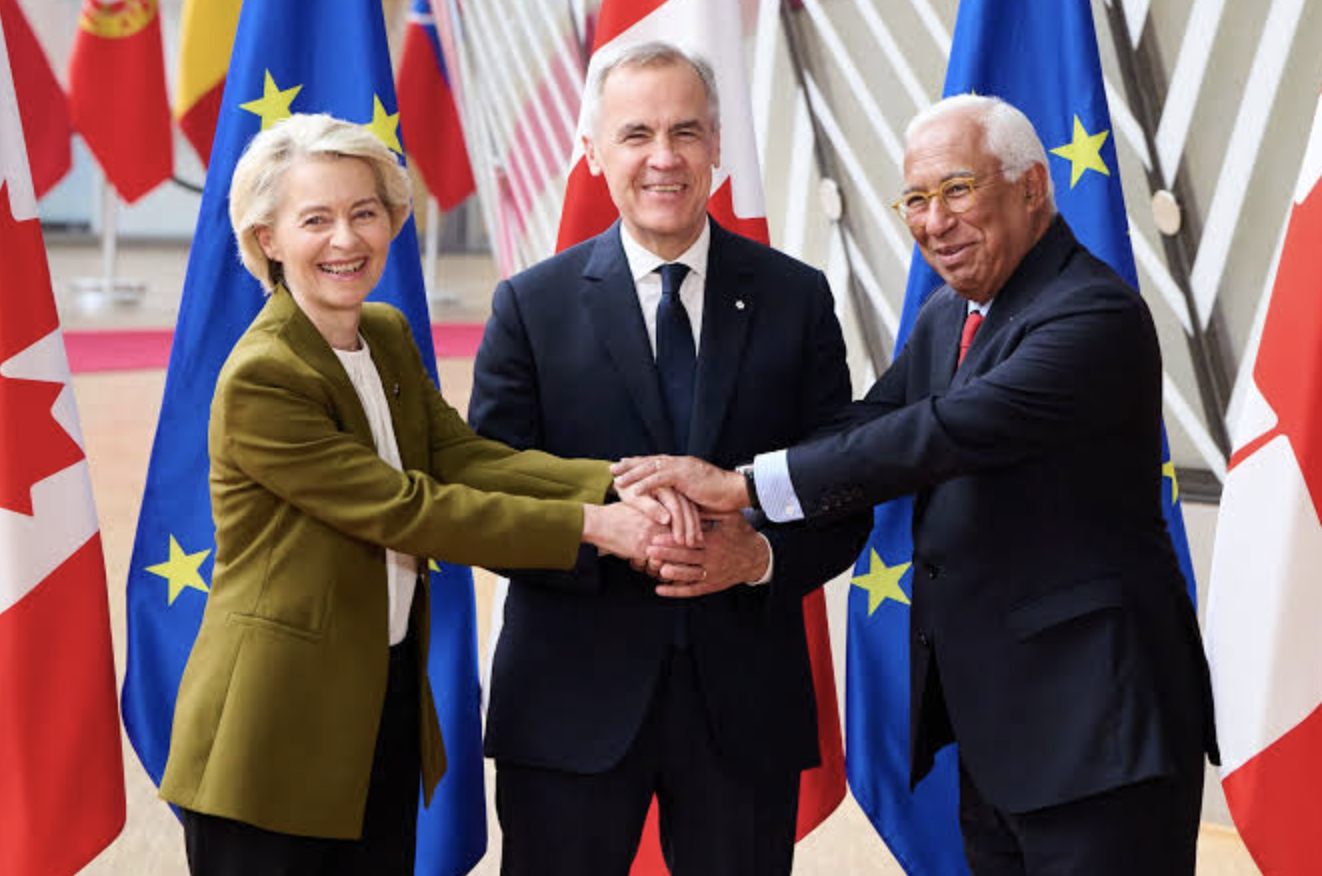
At the 21st EU-Canada summit in Montreal on October 29–30, 2026, Canadian Prime Minister Mark Carney, European Commission President Ursula von der Leyen, and European Council President António Costa unveiled the Alliance for the Future.
Amidst intensifying geopolitical instability, Canada and Europe have deemed it imperative to create a “protective canopy under which our citizens can thrive,” thus necessitating the creation of this new alliance, with all like-minded nations being welcome to join.
Referencing the “erosion of democratic norms” along with “the weaponization of trade,” Carney emphasized how societies across the world “have been shaken by new storms.” Indeed, as the US-Canada trade relationship has been experiencing a historic deterioration, characterized by severe friction and mutual retaliatory tariffs, Canada has been looking for new geopolitical partners that provide the security and assurance that the US has fallen short of. The European Commission President Ursula von der Leyen claimed the alliance could ease those worries, as it has “the potential to offer unprecedented stability and opportunity.”
Both countries reiterated the devastating impact of economic coercion that appears to be more prevalent now than ever, with Von der Leyen stating that “it’s families that pay the price” of selfish trade wars. Mark Carney proposed that this alliance would spark more competition, and therefore more choice, which provides an effective shield against supply chain disruptions and offer a safe haven to prospective member countries looking to weather uncertainty.
The leaders also envisioned a more unified market worth tens of billions of dollars emerging from future talks, with the next one scheduled to take place over the next eight months.
Additionally, Von der Leyen brought up the prospect of Canada becoming an associate member. Since Canada is geographically outside of Europe, full EU membership is impossible under the bloc’s rules. Nevertheless, “associate member” status would still give Canada deeper market access and integration with the powerful organization. Carney made it clear on Thursday that his country was “not seeking to become a full member of the European Union,” yet continued to express openness to becoming an “associate member”
No one knows for certain what EU associate membership would truly look like, as it currently does not exist. Von der Leyen stated that Canada and the actors of the European Union “have the ambition, trust, and creativity to shape it together.” All 27 EU member states would have to agree to and ratify treaty provisions establishing associate status, a process that could take years to complete.
But it seems that this unanimity won’t come anytime soon. Multiple EU countries, such as Germany, have made it clear that they would prefer to build on existing trade agreements rather than create a new form of membership, viewing the title as meaningless.
European Council president Antonio Costa expressed that Canada was “by far the most European of the non-European countries,” highlighting their shared values and goals despite their distinct geographical realities. Rhetoric like this means that, title or no title, Europe and Canada are bound to pursue closer relationships over the coming years.
In an effort to reinforce his country’s long-term political and security commitments to Ukraine, Canadian Prime Minister Mark Carney announced that Canada would join the €90 billion Ukraine Support Loan package for Ukraine with an initial contribution of € 500 million. This was also seen as a way to demonstrate solidarity with the individual countries within the bloc.
Although the details of deeper integration with Canada, Europe, and the rest of the world remain unsettled, the alliance signals a shared determination to push for closer ties in an increasingly unstable world.
Read More Here: