Esshan Kharat — April 14, 2026
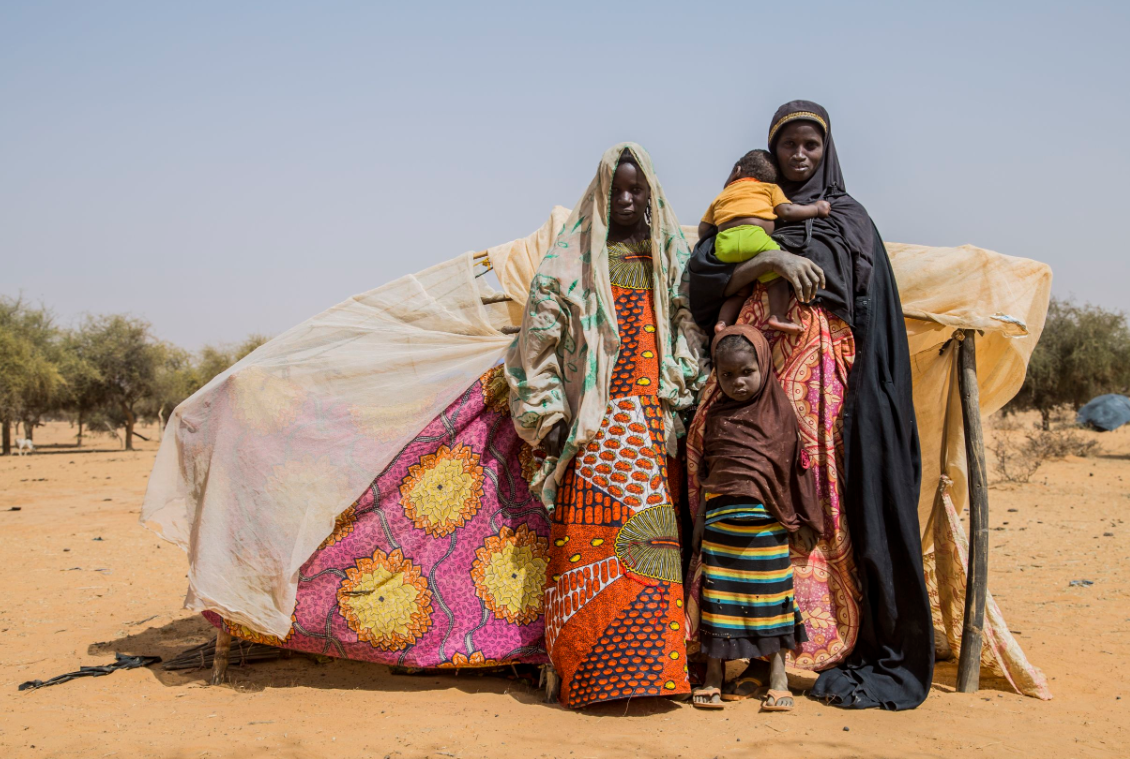
Since 2015, Burkina Faso has been in a devastating war with Islamist insurgents. The war has killed at least 20,000 people directly but displaced more than 2 million in the past decade, nearly 10% of the nation. The battles take place across wider conflicts in the Sahel surrounding jihadists, or violent groups attempting to establish strict Sharia law in the region. In the midst of all this violence, Burkina Faso stands at its center.
Currently, two groups drive a majority of the violence: the al-Qaeda affiliate, Jama’at Nusrat al-Islam wal-Muslimin, otherwise known as JNIM, and IS Sahel, another group that is highly active along the tri-border zone of Burkina Faso, Mali and Niger. When combined, JNIM and IS Sahel control nearly half of Burkina Faso, dominating entire cities. Within these territories, civilians often lack access to food, water, medicine and other basic human services. However, even amidst all of this, the government’s response has been wildly controversial.
Captain Ibrahim Traore took power in Burkina Faso in a coup in September 2022. His predecessor, Lieutenant Colonel Paul-Henri Sandaogo Damiba, had also seized power in a coup amidst public frustration over the government’s lack of decisive action against insurgent actors. Traore blamed Damiba for his lack of attention to the rebellions. Using that same pretense, Traore has rapidly consolidated power to fight back against the rebel groups. Less than two years after the coup in May 2024, Traore announced that he would remain in power for five more years in response to boycotts from political opponents. At this time, Traore’s government began cracking down on the media and kidnapping the leaders of the opposition party. Furthermore, foreign NGO workers were detained within the nation, and Burkina Faso withdrew from the Economic Community of West African States (ECOWAS), a prominent African economic alliance. Finally, the government withdrew from the International Criminal Court (ICC), removing one of the final routes of accountability for its actions.
The main counterinsurgency effort is bifurcated. First, the government uses the Volunteers for the Defense of the Homeland (VDP), which is a civilian militia composed of tens of thousands of Burkinabé, pushed into combat and armed by the government. Second, there are designated military zones that the army has purposefully evacuated to operate without any restrictions. With these countermeasures, the government claims they control more than 75% of the country. However, despite these claims, independent analyses and regional experts fail to verify the possibly politicized numbers. Furthermore, the government is cracking down on basic relief in the nation. Namely, Burkina Faso has limited humanitarian organizations from entering, increased humanitarian aid worker arrests and failed to provide accurate data for international organizations.
The conflict between the major bodies has been growing in recent times. In February, JNIM went on the offensive, launching one of its largest, coordinated attacks ever. This followed the defect of a commander in JNIM, Sadou Samahouna. Samahouna joined IS Sahel, taking a small group of other defectors, but leaving behind fear in JNIM due to his large influence within the organization’s leadership and cohesion. On February 14, hundreds of JNIM fighters on vehicles rushed over and stormed Titao, a city containing a military base. Tragically, JNIM executed at least 34 civilians in the process, ransacking the city by burning buildings down and ravaging communications infrastructure. The group also killed more than 50 forestry officers and four shopkeepers in the following days of the attack. Independent monitoring groups reported more than 30 attacks in Burkina Faso during the offensive, leaving hundreds dead.
Still, civilians pay a greater price than just death from these attacks. While JNIM and other terrorist groups actively slay hundreds, some reports from more than 57 attacks and 400 witnesses have found that the government itself is responsible for more than double the number of killings by Jihadists in the past two years. Even with information being murky and underreported, more than 1,800 civilians have died amidst both a dangerous terrorist group and perhaps a more dangerous governmental one. Particularly, the Fulani community, an ethnic group existing in the nation, is facing some of the most horrifying scenarios. The group is disproportionally targeted, leading Human Rights Watch to accuse them of being targeted as war crimes and crimes against humanity.
This comes at a time when Burkina Faso is looking more and more different by the day. France has not had forces in Burkina Faso for more than three years. After pushing away France, the U.S., and much of the Western World, Burkina Faso seems to be turning to the next best option — Russia. The concentration of defense is rising, and Russian forces now provide personal security for President Traore. However, experts from the Georgetown Journal of International Affairs have argued that the presence of the Africa Corps, Russia’s military branch dedicated to providing support to Africa, isn’t enough to meaningfully reduce the jihadist threats across Burkina Faso.
Looking to the future, the crisis in Burkina Faso is a wider indicator of the instability of the Sahel region. The military’s prevailing style of fighting the violence in the region has not broken the cycle of violence, and in fact, continues to exacerbate it. For the millions that are displaced and the thousands that have died, current leadership across all major bodies seems to do nothing but perpetuate the issue. Overall, the conflict in the Sahel is long-lasting but certainly not done.
Read more here:
- Staff, The Economist
- Staff, Human Rights Watch
- Ladd Serwat, Armed Conflict Location & Event Data (ACLED)
- Alexis Arieff, Congress
- Christopher Faulkner, Georgetown University
Extemp Analysis
Q: Will Burkina Faso end their war with Islamist Insurgents?
AGD: Because this is a war topic, humor needs to be extremely cautious to make sure that no one’s life-changing experiences are being joked about. Personally, I think a narrative is a great way to go here. Make sure to properly tell someone’s story, but also not be TOO long for an AGD
BG: A couple of things are needed to understand here. Firstly, briefly mention the war and how long it has been going on, and then, you should update with the recent attack. This helps bring context to why the question is being asked now.
SOS: You can find some really impactful stats to make the judge care. In this case, talking about the 20,000 people who have been killed or the 2 million who have been displaced can really portray how serious this situation is.
A: I’d probably lean no for this question. The war has been going on for a while now, and it doesn’t seem to be ending soon. However, I do think that there is more evidence based on recent changes that could signal how the war will end, so those are the reasons I’ll give
- Changes in Burkina leadership
- Internal Rupture between Jihadist Groups
- Russia’s introduction
Much of what can be said here is also in the article. The substructure for a question like this would be your A as the past of the situation, B as the present, and then the C is the impact/ future, which in this case, is why the war will end. For example, based on the first point… A: In the past, the leadership of Burkina Faso was weak. Damiba’s attempts at negotiation failed… B: Now, Traore is in power. He is taking much stricter action… C: Therefore, the war will end because these actions will force the insurgent groups to back down. Make sure to include specifics in your subpoints, and you’ll be ready to answer a question about Burkina Faso!