
Blake McFalls — May 12, 2026
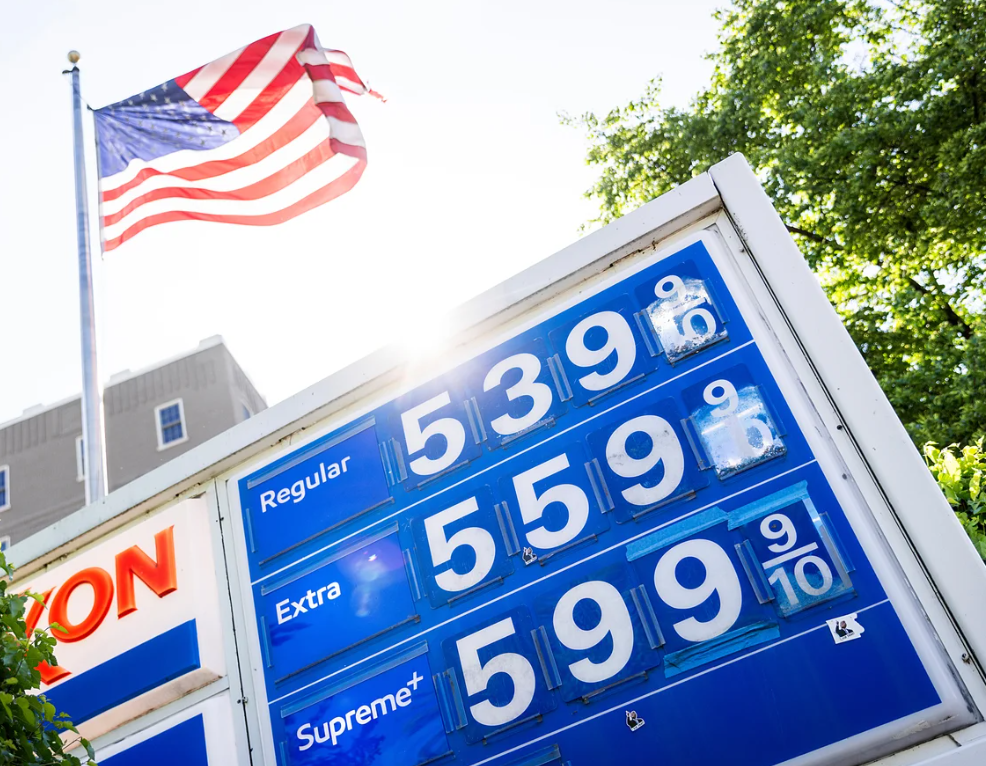
The Iran War has been a political disaster for Donald Trump. 6 in 10 Americans disapprove of Trump’s military action due to issues ranging from spending to gas prices, and whereas discontent with spending on military operations can be quelled with a ceasefire, the Strait of Hormuz remains closed amidst the current ceasefire, causing gas prices to stay high. Having failed to sustain any agreement to open the Strait, Trump has looked domestically to lower gas prices. On Monday, Trump moved to suspend federal gas taxes.
Trump’s policy paradigm on gas prices has been to look downstream at the pump itself. Trump’s actions have often involved deregulation at the expense of existing environmental guidelines. Trump’s first move was to remove regulations on E15 gasoline, or gas that consists of 15% ethanol and 85% gasoline. The Clean Air Act banned the sale of E15 during the summertime due to its harmful impacts on air quality in warmer months. However, other forms of gas, such as E5 and E10, are more expensive. Thus, it has become precedent for presidents facing energy crises in the summer to lift the ban. The Biden administration lifted E15 regulations in 2022, when energy prices spiked amidst global inflation and the Russia-Ukraine war. Now, with energy prices higher than ever under Trump, waiving those regulations seems like a strategic move.
Trump has decided to go further in his effort to lower gas prices by targeting the gas tax. On the federal level, the gas tax’s purpose has been to raise revenue. First instituted during the Great Depression, the gas tax was greatly expanded in 1993, when Congress passed the Omnibus Budget Reconciliation Act. Since the federal gas tax has had a narrow and, to Trump, meaningless scope of addressing budget deficits, the gas tax appears to be low-hanging fruit. However, making a difference using this tool will be difficult. To start, the gas tax has not risen since 1993, remaining at just 18.4¢ per gallon, meaning the removal of the gas tax would have minimal impact. More critically, Trump will need Congressional approval to lift the gas tax, as Congress is the body that instated it. With that said, suspending the gas tax won’t be as polarizing as other Congressional votes. GOP Congresspeople will introduce the bill, but similar legislation has also been introduced by democrats in the past, indicating potential bipartisan support for Trump’s request. Senate Majority Leader John Thune, a figure formerly opposed to suspending the gas tax, now seems indifferent on the matter.
Thune, among a large body of lawmakers and Americans, does not dislike the move to lift the gas tax itself, but rather wants to prioritize tackling the root of the conflict, which is the closure of the Strait of Hormuz. Trump’s actions are more performative than effective, and until he focuses on impacts, Trump will continue to suffer the political consequences of rising gas prices.
Read more here: