Tanvi Ramkumar — May 19, 2026
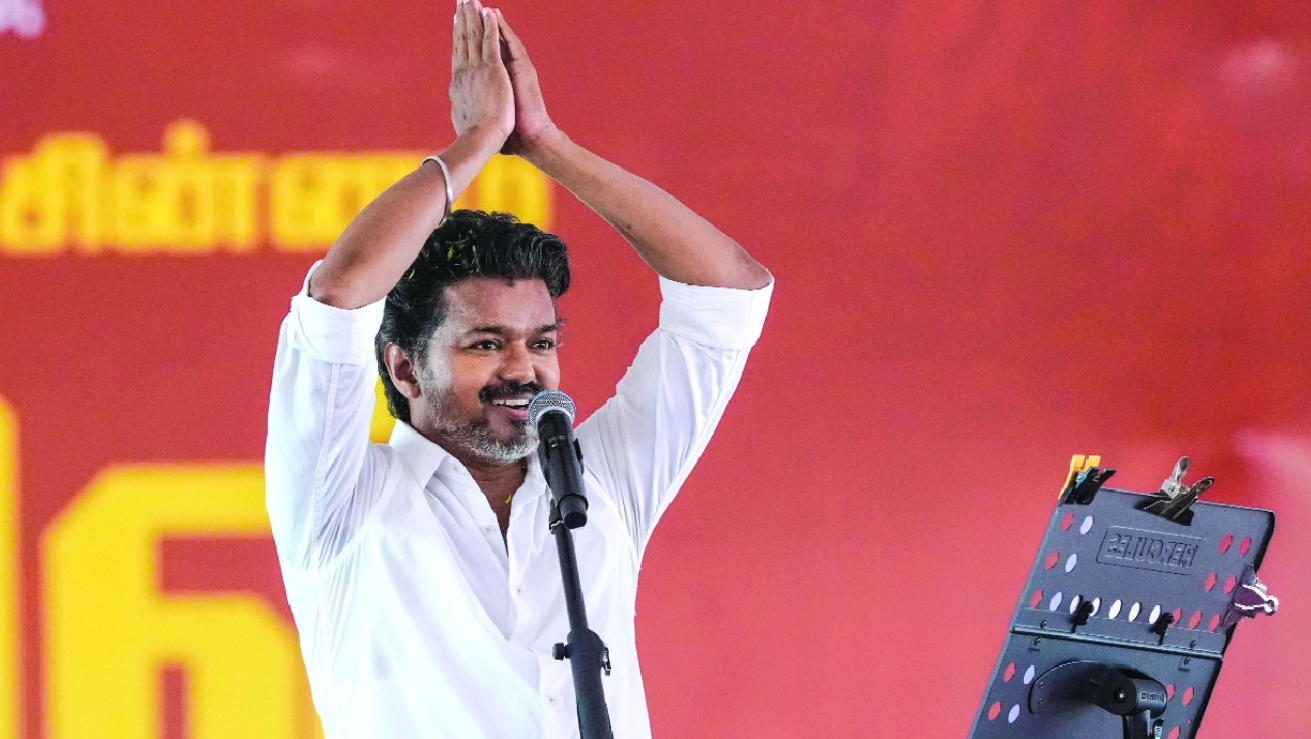
In the early morning hours of May 10, Tamil film star Joseph C. “Thalapathy” Vijay was sworn in as the new Chief Minister of Tamil Nadu, marking a monumental shift away from the two-party dominance of the Dravida Munnetra Kazhagam (DMK) and the All India Anna Dravida Munnetra Kazhagam (AIADMK), which had controlled Tamil Nadu politics for nearly six decades. Although Vijay’s political party, the TVK (Tamilaga Vettri Kazhagam) was only founded in early February 2024, the TVK defied the expectations of many and emerged as the single largest party in the recent election with 108 votes comprising around 34.92% of the total vote. Post-poll data map notes that such performance was shaped by a strong anti-incumbency sentiment.
Voters across the state showed growing dissatisfaction with the incumbent DMK-led government and have begun shifting towards either the DMK’s main political rival, AIADMK, or the newly-formed TVK. However, the proportion of those who chose the TVK was much higher than those who opted for the AIADMK. The political landscape also appeared to be favorable in time towards the TVK. When pollers were asked which party would be best suited to deliver on critical issues such as development, job creation and inflation, around three in ten respondents reported that none of the parties were capable enough. The evident broad vacuum of trust in the established political parties allowed the TVK to storm into the scene to position itself as an appealing alternative to the DMK and the AIADMK parties.
51-year old Vijay, fondly referred to as “Thalapathy Vijay” (Commander Vijay) has appeared in 69 films and is among the highest paid stars in Indian cinema. The mixing of cinema with political parties is nothing new for Tamil Nadu, and Vijay has followed in the footsteps of preceding film stars who have led the state for years, like M.G. Ramachandran, who founded the AIADMK, and J. Jayalalithaa. Unlike his predecessors, however, Vijay has no political experience. In 2024, he announced that following the release of his final film, “Jana Nayagan,” he would retire from the acting world. Thus, the TVK instead was primarily built upon Vijay’s massive existing fanbase, and the actor’s organizational strategy transformed his fan clubs into reliable political cadres that instructed a grassroots network that consisted primarily of fans, the younger generation and first-time voters.
Anup Chandrasekharan, a Bangalore-based media strategist, argued that the reason behind the TVK’s astounding success stemmed largely from the power of social media. This was despite Vijay’s limited visibility on the ground, following controversy after a TVK political rally in September 2025, which resulted in a crowd rush that killed 40 people. While Indian elections are usually fought on the ground through massive rallies, fiery speeches and door-to-door campaigning, Vijay’s supporters were miles ahead of the actor’s rivals, creatively using YouTube, Instagram, Facebook and other social media platforms to amplify the actor’s presence. Additionally, in many of Vijay’s films, he is depicted as a fierce man fighting against inequality, corruption and injustice. This established projection of a man who championed the rights for marginalized and voiceless communities made him quite popular amongst Gen Z and female voters.
Vijay’s ultimate rise to power represents far more than just the success of a popular film star, but rather a broader transformation in the voting priorities of India’s new generation. As Vijay enters his five-year term, the durability of his political movement will depend primairly on the ability of the TVK to address the pressing economic and social frustrations that propelled the people of Tamil Nadu to cast their vote for Vijay in the first place, not just cinematic presence.
Read more here: