
Steven Zhang — May 19, 2026
On May 2, 2026, passengers aboard the MV Hondius, a cruise ship traveling across the Atlantic, reported an unidentified respiratory infection to the World Health Organization (WHO). In the coming days after the death of a passenger, the WHO identified the deadly infection as the Andes strain of Hantavirus, a disease transmitted by rodents. With a mortality rate of around 30%, there was cause for alarm, even if the spread of the disease was limited. Despite the media frenzy, the WHO firmly maintained its stance that the outbreak posed very little threat to civilian populations. The Spanish island of Tenerife was chosen as the appropriate docking site for the MV Hondius, and its passengers were subsequently transported to their home countries, where monitoring has continued without cause for concern.
By any means, the WHO’s response to the Hantavirus outbreak was organized and proper. Fatalities were limited, and survivors were appropriately repatriated; order was maintained. Despite the media frenzy, the WHO was able to effectively prevent misinformation and calm the online agitators.
Part of the reason for the Hantavirus response’s effectiveness is that it was largely confined to the MV Hondius. There were a few loose ends, such as the KLM flight, for authorities to tie up, but the outbreak was largely self-contained to a select ship until the WHO permitted it to begin deboarding. Because the outbreak was already self-contained to the MV Hondius, it was incredibly easy for the WHO to stem the infection at its source by quarantining the passengers aboard the ship. In terms of epidemiology, this Hantavirus outbreak is as neat and tidy as outbreaks get; it might as well have been handed to the WHO in a gift-wrapped box. The same, however, cannot be said of the latest Ebola outbreak in the Democratic Republic of the Congo (DRC).
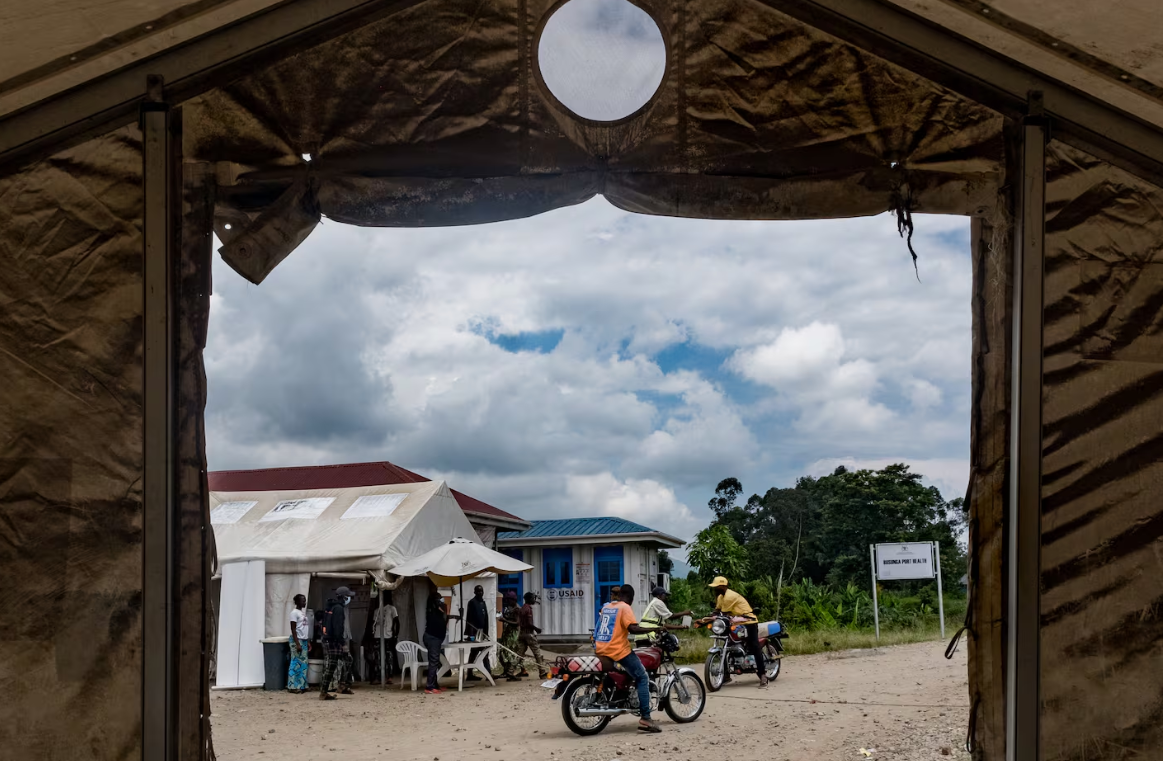
The Ebola outbreak was first detected by the DRC Ministry of Health on Friday, May 15. Since then, at least 100 confirmed deaths have been recorded in the DRC’s northeastern Ituri province. The WHO has declared the Ebola outbreak a public health emergency of international concern, stating that the outbreak has the potential to be much larger and more severe than what is currently being detected and reported, with significant risk for cross-border spread and international transmission. Ebola cases have already been diagnosed in Uganda, with many governments, including the United States, placing travel restrictions on affected nations.
This Ebola outbreak fundamentally differs from the Hantavirus outbreak in two main ways. First, the Ebola outbreak is much messier. Hantavirus was contained to a single cruise ship. With Ebola, it is impossible to document all of the cases, and active paramilitary groups like M23 in the region have historically made coordinated disease response much more difficult. Second, Ebola is much deadlier. Hantavirus has an already high mortality rate (around 30%), Ebola has an average mortality rate of 50%, but in past outbreaks, the mortality rate has been as high as 90%. For instance, the coronavirus has a mortality rate just above 2%. Ebola is also much deadlier than Hantavirus because it is much more transmissible. Hantavirus requires very close quarters contact for extended periods of time to spread. Ebola spreads through the transmission of bodily fluids. In countries like the DRC, with poor sanitation compared to developed nations, untreated bodily fluids like feces and urine can more easily come into contact with healthy individuals.
Many across Africa still remember the West African Ebola outbreak from 2014-2016, where more than 28,000 people were infected, and 11,000 were killed globally. The primary reason why this outbreak is so much more alarming than past outbreaks is that the Ebola outbreak in the DRC is caused by the Bundibugyo virus and not the Zaire strain, which has been the primary focus of medical research on Ebola and has caused most Ebola outbreaks. There are no current vaccinations or effective treatments for the Bundibugyo strain of Ebola, and many governments fear an outbreak as bad as 2014, when African nations were caught unprepared. It remains to be seen how the WHO will contain this outbreak and how effective their measures will be.
Read more here:
Extemp Question: How should the World Health Organization respond to the Ebola outbreak in the Democratic Republic of the Congo?
Extemp Analysis by: Steven Zhang
Question: How should the World Health Organization respond to the Ebola outbreak in the Democratic Republic of the Congo?
AGD: Definitely something serious. A serious topic warrants a serious introduction. I’d probably go for a narrative that involves an individual who experienced firsthand the West African Ebola outbreak of 2014.
Background: Include a source that discusses how serious Ebola is, how it spreads, current events regarding the issue, and what the WHO can do to potentially stem the spread of this latest outbreak.
Answer: I’d go with a sort of “nothing sandwich” here because having the answer be the three points would be useful and could widen the scope of the speech.
First point: Trans-border containment
Discuss how the WHO has a lot of authority as an international health executive, and what actions it can take to stem the spread by cooperating with international governments. Talk about travel advisories, containment, improved screening, and how these measures can be implemented to great effect.
Second point: Paramilitary cooperation
Discuss how many paramilitary groups are occupying the region that is currently being affected by the Ebola outbreak. Mention how this hinders response. Explain that if the WHO wants to clamp down on the outbreak, they need to set aside international reservations against paramilitary groups and cooperate with them in order to best contain the outbreak.
Third point: Technological development
Discuss technological barriers to treatment, and how there is no vaccine or effective treatment for the current strain that is causing this outbreak. Quantify the WHO’s financial resources allocated towards vaccine and treatment development, and how these resources could be used to find a vaccine to prevent infections in the long-term from this strain of Ebola.
Concluding Thoughts
This is definitely a problem-solution question. In all three points, first establish what the problem is, and then explain how the WHO has the capabilities to solve or ease the problem.