
Ty Tan — May 26, 2026
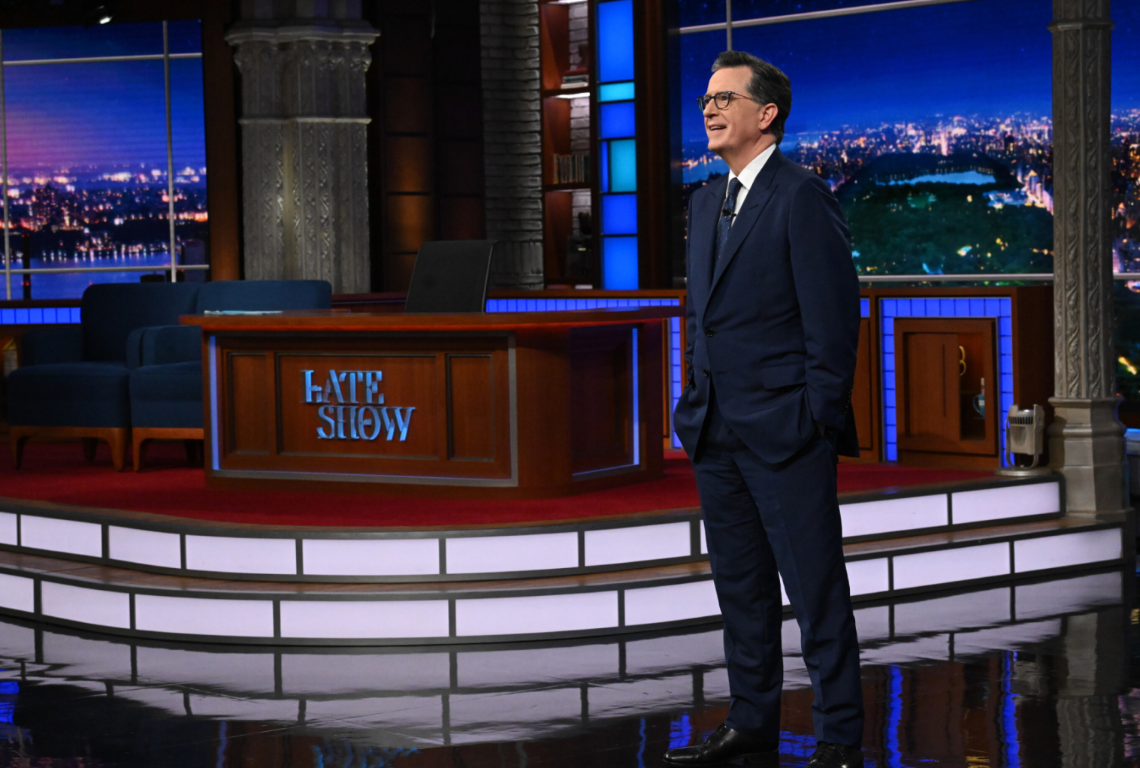
For today’s youth, those words mean nothing. Yet for an entire generation of adults, those words meant everything. Since 1993, the CBS News network has hosted The Late Show, originally with David Letterman, and later with its current host, prolific comedian Stephen Colbert. After 11 years of comedy and satire, Stephen Colbert gave his final show on May 21, 2026, after CBS chose to cancel The Late Show. With this historic, top-rated program coming to an end, the shift away from traditional entertainment is obvious: the question now is, what happens to broadcasting from here?
Traditional media as a whole is in economic freefall. Across the board, Television revenue has fallen from $100.09 billion in 2017 to $84.29 billion in 2024, a 16.5% decline. In a practice known as “cord-cutting,” families are abandoning traditional pay TV services in exchange for streaming or short-form content. For the youth, only 16% of Americans aged 18–29 now subscribe to cable or satellite, demonstrating that the younger generation simply isn’t interested.
For traditional media firms like CBS, pulling the plug makes the most sense to adapt to new audience tastes. The cancellation of The Late Show, CBS cited, was due to its losses, costing the company nearly $40 million annually. Alongside this, CBS’s ad revenue dropped 26%, and its audience share has declined 20% in key demographics such as people aged 18-29. While the show’s rating may have been sky high, arguably the top-rated late-night show program, struggling financial factors forced CBS to cut the show in hopes of shifting funds elsewhere.
Without voices like Colbert, a national cultural understanding is deteriorating, creating a political and cultural vacuum that will likely remain unfulfilled. Stephen Colbert’s show averaged 2.69 million viewers in its final season. For such a popular show, its gutting will force viewers to do one of two things: stop watching broadcast TV in that slot or migrate elsewhere for entertainment. By losing Colbert, an important voice in political content nationwide has been lost. One worrying trend is the potential shift toward short-form content for political discussion.
Short-form platforms like TikTok and Instagram reward divisive political messaging that draws audiences into their own separate extremes. The algorithm is designed to create “political echo chambers” that deepen polarization without fostering understanding. While Colbert himself was criticized for being too opinionated against a certain president, Greg Gutfeld’s show on Fox News balanced out his views. Thus, while traditional media gave people the chance to expose themselves to both sides of a discussion, the platforms that attract today’s youth silence dissent instead. As this short-form content fills in for shows like Colbert’s, our media landscape is turning into a polarizing place where political satire is a dying art.
As this article serves as my last in the position of Red Folder Associate Editor, I find it fitting to end this article with Stephen Colbert’s last words on-air: “Have a good show. Thanks for being here. And let’s do it, y’all.” When the world constantly changes, heed his words carefully, because you never know when your show will come to an end, too.
Read more here:


