
Brogan Jones — June 2, 2026
Since Russia’s invasion of Ukraine in February of 2022, the Russo-Ukrainian War has heightened global tensions, drained defense budgets, and created a humanitarian crisis. Thousands of Ukrainian civilians have died and Russian forces have suffered over 1.2 million casualties. Despite the billions of dollars in military aid that Ukraine has received from western nations, Russia continues to occupy 20% of the country. Now, four years after it began, Russian President Vladimir Putin has escalated the war into a new series of fatal interactions by launching one of his deadliest offenses yet.
In recent months, the Ukrainian military has ramped up its attacks on Moscow’s energy supply, targeting key oil, gas, and nuclear facilities. This is in line with the western strategy of exhaustion that has forced Russia onto a desperate war footing. Still, Russia’s exasperation did not prevent Putin from retaliating. On Tuesday, devastating attacks left major Ukrainian cities, like Dnipro and Kyiv, in disarray. The attacks involved over 600 drones and dozens of missiles, some of which were of the advanced hypersonic variety. The offensive constitutes one of the heaviest bombardments since the beginning of the war.
As the attacks came, over 41,000 people sought shelter in the Kyiv subway system. While the capital was able to avert major casualties, strikes across Ukrainian cities left at least 22 dead and dozens injured. Beyond just the death toll, the attacks targeted key residential, energy, and civilian infrastructure. Among the sites affected were dense medical facilities and crucial oil terminals.
Putin has promised that this attack is the first of many to come in a new wave of Russian aggression. The Kremlin has threatened systematic strikes on Kyiv and warned foreigners, such as U.S. diplomats, to evacuate the capital immediately. Indeed, Ukrainian President Volodymyr Zelenskyy believes more assaults are imminent. Shortly after the attacks Tuesday morning, Zelenskyy asked the U.S. to increase military aid to help deter and contain future strikes.
Read more here:
- Anastasiia Parafeniuk et al., NBC
- Kosta Gak et al., CNN
- Maria Varenikova & Kim Barker, New York Times
- Yuliya Talmazan and Anastasiia Parafeniuk, NBC
- Valentin Ogirenko & Anna Voitenko, Reuters
- Samya Kullab & Vasilisa Stepanenko, PBS
Extemp Question: How will Russia’s new wave of attacks on Ukraine affect global geopolitics?
Extemp Analysis by Brogan Jones
AGD/Background: For this one, I would start with something more serious, maybe a description of how widespread the destruction in Ukraine has been. As for the background information, you’ll want to briefly cover the trajectory of the war, i.e. how it started, how long it’s been going on for, key turning points, etc.
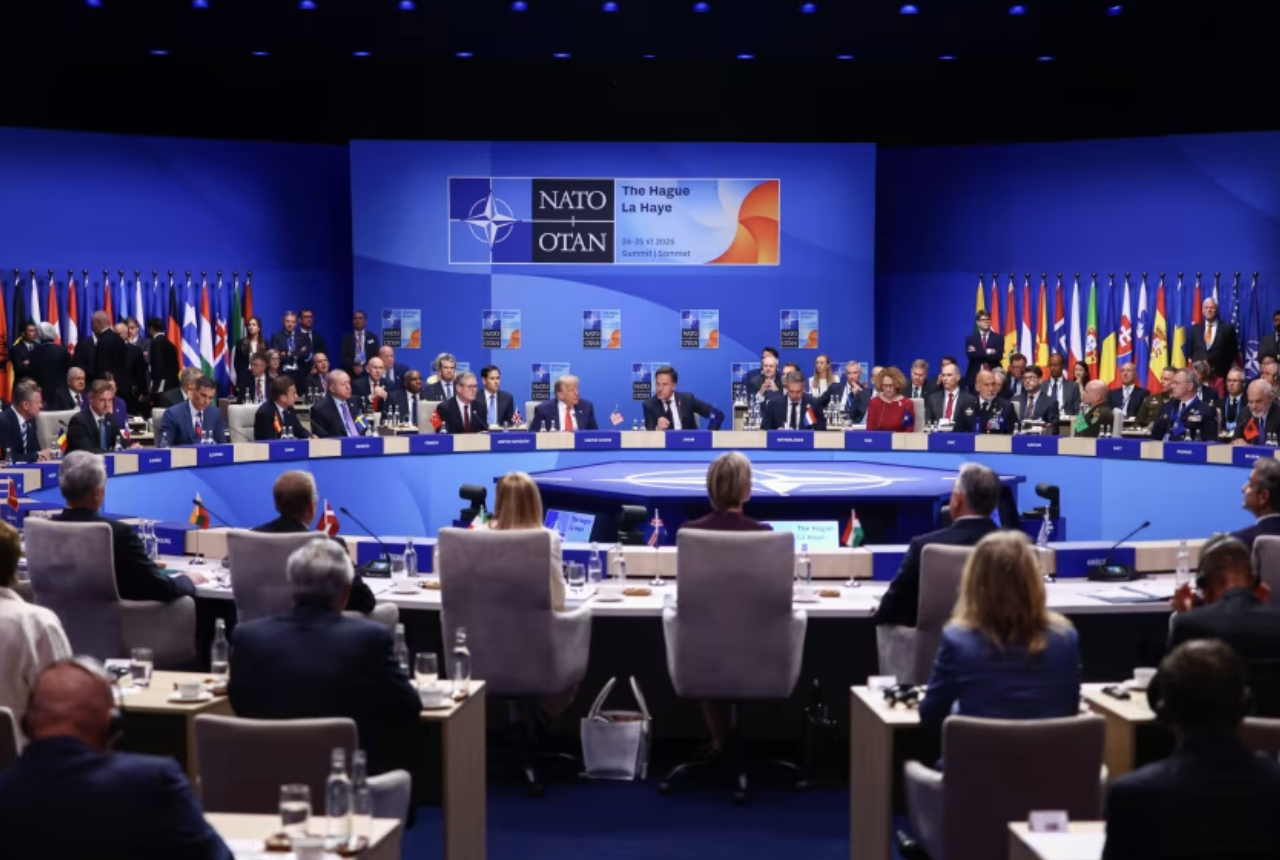
Answer/SOS: If I got this question, I would say that the new wave will greatly affect global geopolitics in three key ways… 1) Increasing tensions within NATO, 2) Increasing military spending, and 3) Complicating economic relationships.
For the first point, you could talk about all of the tension that the Russo-Ukrainian War has already caused for NATO, with countries disagreeing over whether or not to let the country join the alliance and whether or not to continue sending aid to help Ukraine defend itself. Then, I would just talk about how further aggression will reignite these sentiments.
For the second point, I would once again reference the large sums of money in military aid that has already gone towards Ukraine. Then, I would talk about how Ukraine is likely to receive more aid as Russia’s attacks intensify, leading to further debates within countries about military spending and increased geopolitical militarization.
Finally, I would just talk about all of the damage that Russia’s aggression has already done to economic partnerships with major countries around the world. Countries have been forced to reduce economic ties with Russia, leading to global energy shortages. As Russia continues its assault, sanctions and other actions are likely to increase, leading to more economic strain and even more complex relationships among trading partners.