Armaan Zaidi — September 1, 2026
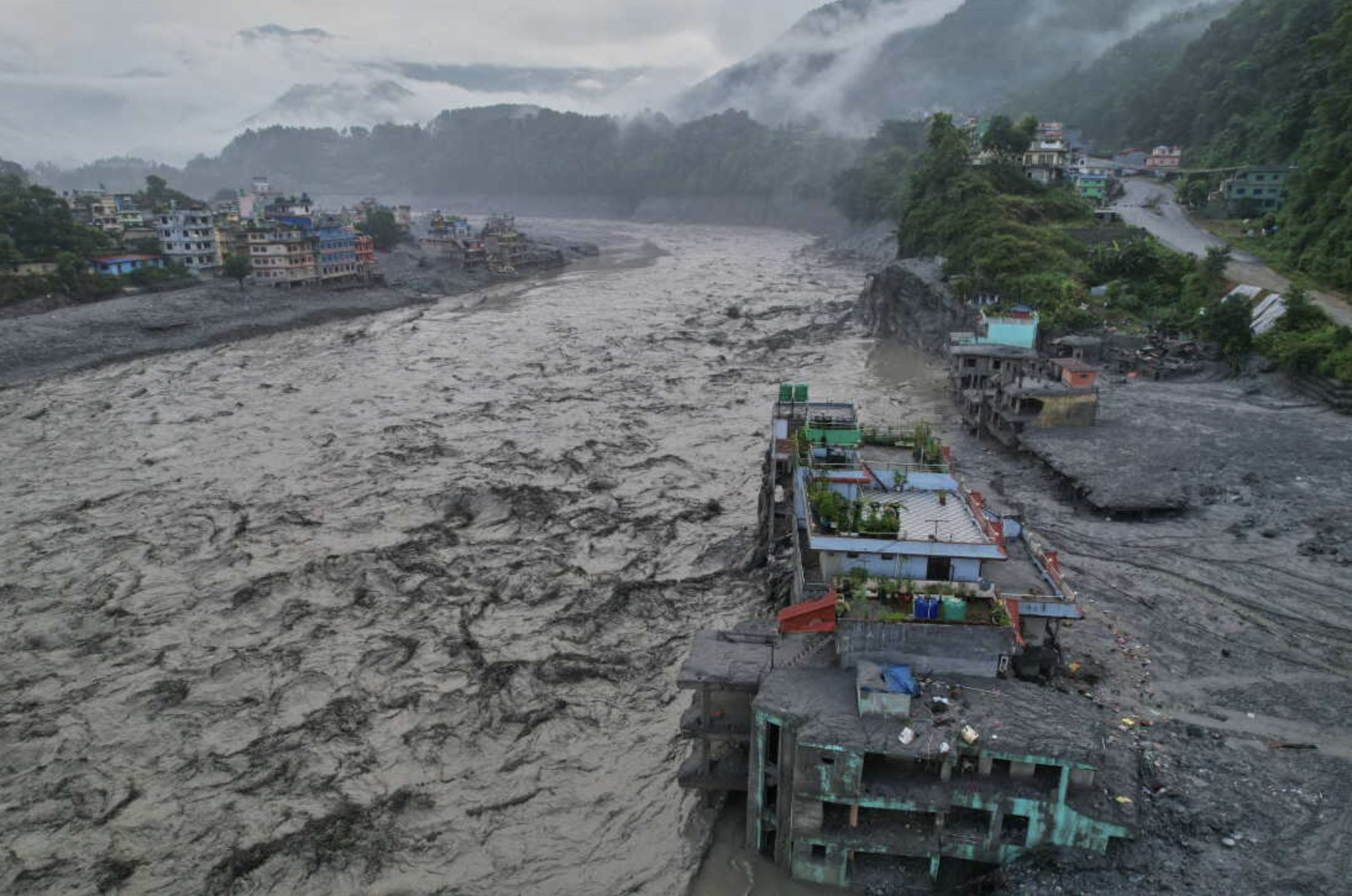
On August 26, a large glacial landslide fell into a river alongside the mountainous border between Nepal and China’s Tibet region. This resulted in a massive flood wave which scientists describe as equal to 500,000 large dump truck loads of rock and ice. Across the Nepali districts of Nuwakot and Rasuwa, villages were wiped out, bridges were destroyed, and homes were buried by the intense wall of mud and debris created throughout the Bhote Koshi and Trishuli river valleys. Nepali police confirmed at least 616 deaths, 2,500 people still missing across both countries, and more than 2,300 additional people still injured and receiving treatment.
The catastrophe has gained worldwide attention, primarily due to its implication on foreign nations. The Himalayan border region harbours Mount Kailash situated in the Tibet region, which serves as a safe-haven for pilgrims. A large portion of those missing are Americans, 142 Indians, 34 Australians and many others from nations across the globe including Malaysia, South Korea, Portugal, The Netherlands, South Africa, the United Kingdom, and Russia. Among those accounted for are 9 South Korean hydropower plant workers and 28 Nepali police officers sent to the region.
The region’s steep, mountainous terrain has provided rescue operations with a challenge. China has since deployed military transport planes and specialist engineering teams to easily fly over and dodge destroyed infrastructure, unpredictable weather, and frequent power outages. President Trump has said the United States is willing to “send any help needed.” Officials are now fighting the clock as a newly formed glacial lake upstream the past landslide has raised fears of a second, potentially larger and more impactful flood.
This disaster, as scientists predict, is possibly one of many to come. The Himalayas are one of the fastest-warming regions on Earth. A December 2025 study in Nature Communications found that glacial lake outburst flood frequency has nearly tripled over the past several decades, rising an average of 5.2 events per decade in the 1980s to 15.2 by the 2010s. The United Nations University has similarly warned that GLOF events in the Himalayas now occur nearly five times more often than before 1950, caused by glacial retreat and the continuation of unstable mountain lakes that put roughly two billion people downstream at risk.
The tragedy also raises problems of cross-border responses to disasters between Nepal and its larger neighbors. Although India and China have offered assistance, the Nepal government declined foreign rescue teams, arguing that its security forces could handle the situation. The tragedy also marks an early challenge for Nepal’s young prime minister, Balendra Shah, who took office just five months ago after protests from Gen Z pushed for a change in governance. Nepal’s rapidly changing climate, unstable mountain ecosystem, and the border region that is still sorting out its coordination issues create the backdrop for the tragedy.
Read more here