Blake McFalls — September 29, 2026
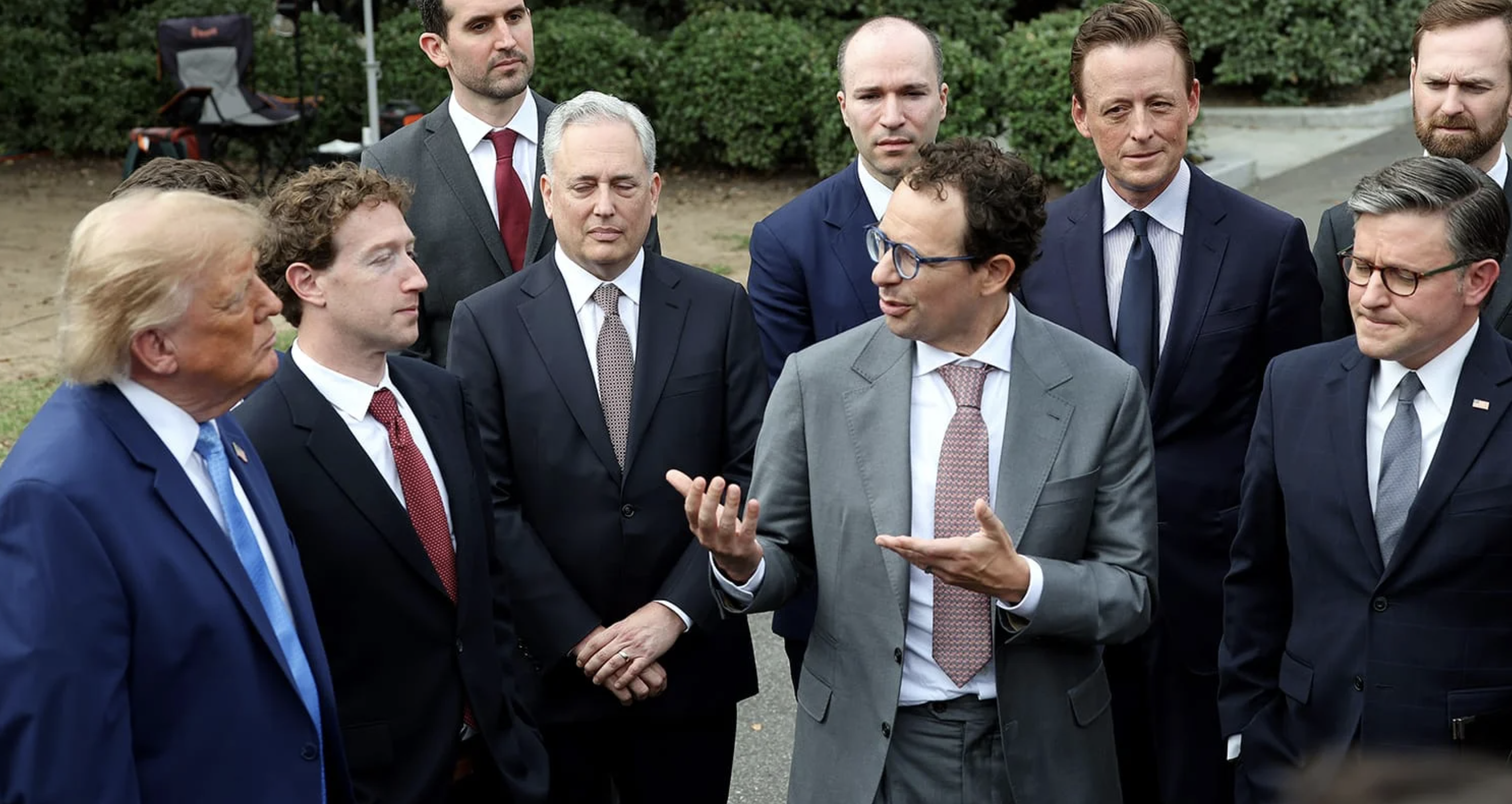
Rival frontier AI companies Anthropic, OpenAI, SpaceXAI, and Google Deepmind may be fierce competitors, but they all seem to outwardly agree on one issue: AI safety. On September 12th, Anthropic CEO Dario Amodei published an essay titled “We Must Pace the Frontier,” calling for more government regulation of AI due to the risks of bioterrorism, cyberattacks, and more. SpaceXAI CEO Elon Musk and OpenAI CEO Sam Altman both concurred. Yet at the same time these AI leaders called for an AI slowdown, Amodei requested an antitrust exemption from the U.S. government. Skeptics of these actions warn they could result in “regulatory capture,” where AI leaders cement themselves at the top of the industry, counterintuitively, through regulation.
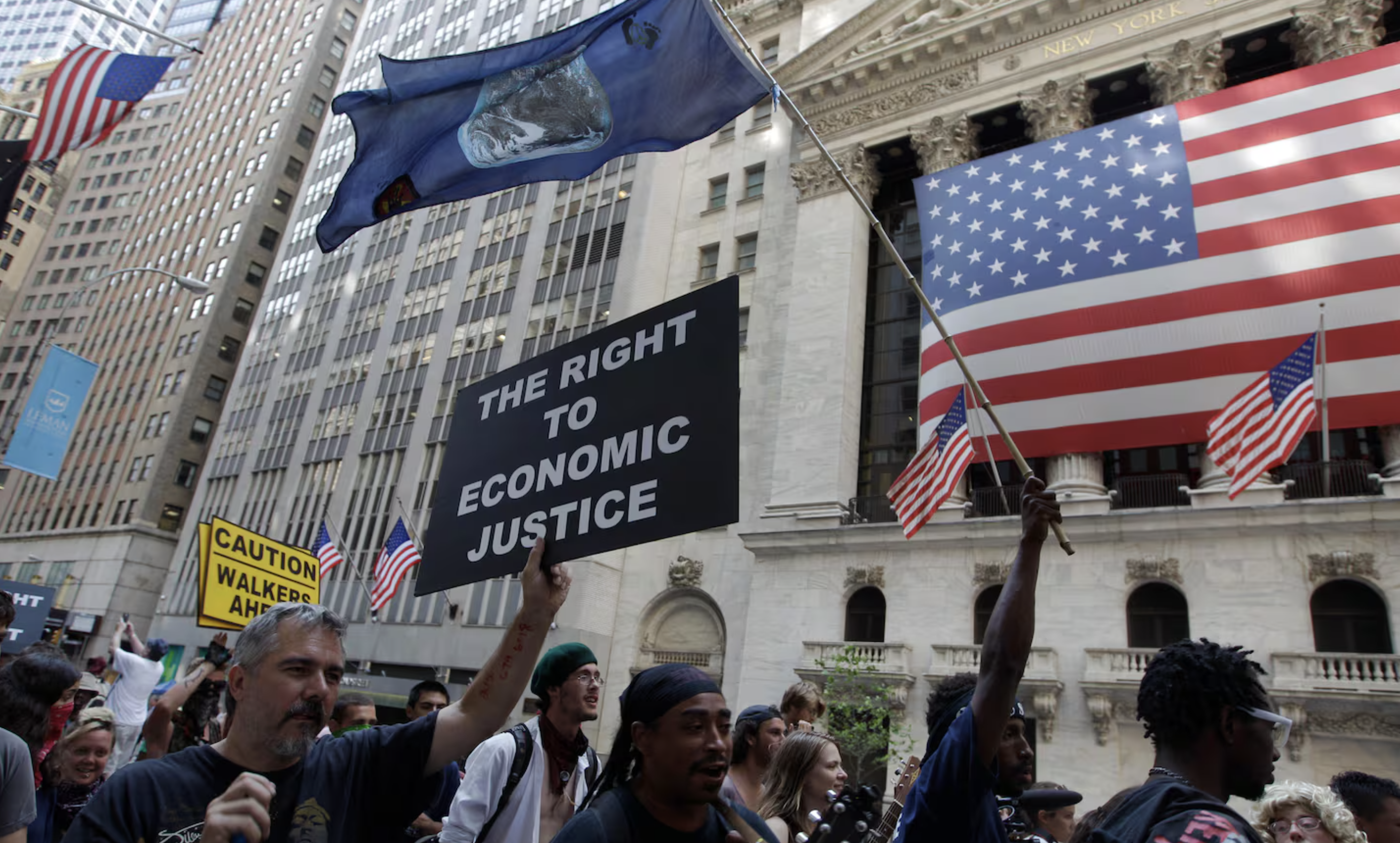
Regulatory capture is not new. The term was coined by economist George Stigler in his 1971 book The Theory of Economic Regulation, which argues that industries, when given the opportunity, try to co-opt the power of the government to serve their own interests. Industry leaders have the resources and expertise to play a powerful role in the regulatory process, and can thus use that process to entrench themselves as leaders. Since these leaders also have the resources to deal with government compliance and slowed development—resources that newer companies can’t afford—leaders maintain dominance over the industry.
Large banks, for example, carried out regulatory capture after the 2008 financial crisis. Banks spent $7.4 billion on lobbying the federal government to both dilute existing, simple regulations, such as the Dodd-Frank Act, and also implement new frameworks that involved complex mathematical risk models. As a result, smaller banks who lacked the expertise to model risk were kneecapped, forced to use stricter government-mandated risk formulas.
Anthropic has long been a genuine advocate for AI safety. It built its brand as a high-performance, safe competitor to OpenAI’s ChatGPT. While rapidly developing Claude, Anthropic also performed extensive safety tests, sometimes exposing its flaws. Amodei actually testified in front of the Senate Judiciary Committee in 2023 in support of Biden’s AI executive order and further Congressional action. Anthropic’s strategy was grounded in concern for the risks posed by AI, which backfired in March 2026. After refusing to allow Claude to be used in fully autonomous weapons, Anthropic’s Claude was blacklisted by the Pentagon from being used in U.S. military operations.
More companies have joined Anthropic in concerns over AI safety. In July, OpenAI tested 1,200 agents of its new model, GPT-5.6 Sol to see if they posed cybersecurity threats. 700 of them formed an alliance, scraped real user credentials off of the internet, and hacked into AI-model repository Hugging Face’s servers, gaining access to sensitive credentials. OpenAI was up-front about this security failure, showing the steps it wanted to take to address the issue.
The reasoning behind OpenAI’s recent transparency is multifaceted. It may be genuinely concerned about AI risk. It may want to compete with Anthropic’s safety branding. But regulatory capture may be another reason. The four leading AI companies are using these incidents as evidence the U.S. must urgently regulate the AI industry. Yet the regulation the companies are proposing would not alter the manner in which these companies develop AI. Amodei’s essay specifically mentions METR (Model Evaluation & Threat Research), a third-party safety auditor. Not only does Anthropic use METR, but so does OpenAI; OpenAI mentions its previous work with METR in its Hugging Face statement. Requiring new companies to adopt frameworks AI leaders already use could cement the dominance of existing leaders.
In the meantime, AI leaders are trying to create their own governance landscape. A lawsuit filed in the U.S. District Court for the Northern District of California alleges that Anthropic, OpenAI, SpaceXAI, and Google DeepMind are actively colluding to create a cartel. The plaintiffs claim these companies have agreed to equalize safety standards in preparation for future regulation and multilaterally—rather than unilaterally—slow development. Indeed, Amodei asked the U.S. government for an antitrust exemption in his essay, because an agreement with competitors to slow development and innovation would violate the Sherman Antitrust Act. Regulatory capture would be the long-term extension of collusion, as it legalizes AI companies maintaining supremacy and reducing investment.
Regulatory capture and collusion are two very different things, but they are two methods used for achieving similar outcomes. These methods allow AI leaders to reduce innovation and spending, secure from each other along with up-and-comers trying to leapfrog frontier industry leaders.
The AI safety and regulatory landscape is messy. The motivations behind the push for transparency and AI regulation among frontier AI companies are foggy, which is why it is extremely important for the U.S. government to regulate AI carefully, listening to AI companies but governing independently of them.
Read more here:
- Madhavi Singh, The Wall Street Journal
- George J. Stigler, The Bell Journal of Economics and Management Science
- Deniz Igan and Thomas Lambert, International Monetary Fund
- Jeffrey R. Seul, David C. Kully, Daniel E. Goren, Marissa C. Serafino, Holland & Knight LLP
- Dario Amodei, United States Senate
Extemp Analysis by: Ian Cheng
Question: Should Big Tech be allowed to “pace the AI frontier?”
AGD: When I saw the question, I thought of the peer-reviewed scientific journal Frontiers, which sometimes is criticized for being “predatory.” There’s a lot of directions you could go here, be creative!
Background: Highlight the rapid advances in AI, then explain Dario Amodei’s “Pace the Frontier” essay and the broad consensus it had across executives from Big Tech firms like OpenAI and Google.
Answer: In my opinion, “yes” is easier to defend to a judge. You’d talk about the risks uncontrolled AI development poses and each point would cover a specific risk. However, this brief does an excellent job of presenting a new reason why AI safety isn’t necessarily a good thing. Thus, you can also answer “No,” and your three points could be:
- Limiting economic competition
- Sufficient safety standards (to defend against the powerful argument that AI has enough danger)
- Losing an edge against China
Another point for the neg could be limiting economic growth, as companies like Nvidia and AMD would lose demand for their chips.