
Brogan Jones — March 24, 2026
A conflict between the United States, Israel and Iran began in full force when the U.S. and Israel coordinated joint attacks on Iran on February 28. Targeted strikes in the country have resulted in thousands of civilian deaths already. Iran has responded by launching retaliatory missiles against Israel. The conflict has also invited the possibility of grave economic retaliation from the Iranian government, which has threatened to close the Strait of Hormuz if Trump continues to attack Iranian infrastructure. Amidst all of these concerns, the international community has largely opposed the war, albeit perfunctorily. Still, despite political and economic condemnation from countries around the world, a severely underreported impact of the war has been the effects of the increasingly tense regional conflict on the environment. Targeted strikes on Iran have increased environmental damage in nearly every way possible, from carbon emissions to pollution.
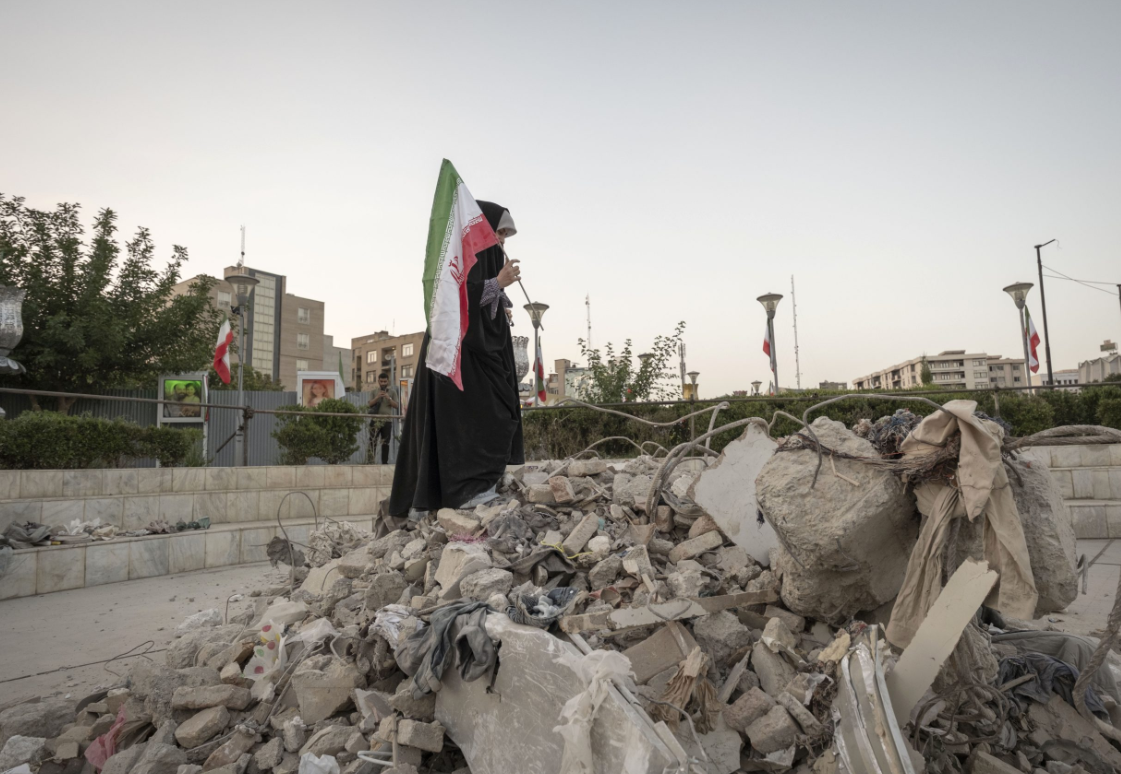
The first major environmental consequence of the war is emissions. The U.S. and Israel’s actions in Iran in the past two weeks have released five million tonnes of greenhouse gas emissions into the atmosphere. This means that the war is actively draining the global carbon budget faster than 84 countries combined. These emissions have come from several sources. The most obvious is the release of energy from missile deployments, but this actually only accounts for a very small fraction of emissions. In reality, the most potent emitter has been the destruction of over 20,000 buildings, which is responsible for over two million of the five million emitted tonnes. The other main source of emissions is simply the energy required to establish a military presence abroad. The U.S. and Israel have driven up their respective carbon footprints, keeping jets, bombers and naval fleets on stand-by in Iran. A prolonged war will worsen this source in particular, as it will require continued U.S.-Israel operations in the country.
Emissions are not the only source of environmental damage, however. The war in Iran has also fueled unparalleled pollution. U.S. and Israel missiles have frequently attacked Iranian oil refineries and military bases, burning and spreading dire pollutants like fuels, oils, heavy metals, energetic compounds and PFAs. On oil refineries specifically, strikes in Tehran destroyed millions of barrels of oil, resulted in toxic acid rain and exposed millions to various forms of dangerous pollution.
Whether emissions or pollution is used as the metric, the war in Iran has had devastating environmental consequences. In just under a month, it has produced as much carbon emissions as countries like Kuwait and Iceland produce in an entire year. It has also caused unique and grave impacts on pollution that will likely leave Iran’s environment volatile for years to come. While political, diplomatic and economic assessments of the conflict in Iran have become frequent topics of international discussion in recent weeks, the environmental consequences have been drastically undercovered, despite being especially dire and long-lasting impacts of the war.
Read more here:
Extemp Question: What will be the long-term environmental impacts of the war in Iran?
Extemp Analysis by Brogan Jones
AGD/Background: You can open this one up however you’d like, though I’d certainly suggest something more serious for the AGD. As for the background information, you’ll want to briefly cover the war in Iran, i.e. how it started and how long it’s been going on for.
Answer/SOS: If I got this question, I would say that the war will be extremely damaging to environmental health, and that these impacts will be long-lasting. I would then say that this occurs in three parallel ways… 1) Increasing carbon emissions, 2) Spreading pollutants, and 3) Lowering international standards of environmental accountability.
The first point is fairly simple and pretty dense. You can talk about the different sources of pollution, such as deploying missiles, maintaining a robust military presence, and destroying over 20,000 buildings in Iran. Then, there’s a lot of great statistics to include under this point. You can mention how over 5 million tonnes of carbon emissions have been produced in just a few weeks, and how this is equivalent to the annual output of countries like Kuwait and Iceland. It’s also equivalent to the total emissions of the lowest 84 emitting countries.
For the second point, you can talk about how oil refineries and military bases are being targeted by U.S.-Israeli strikes, which is leading to the spread of lethal pollutants. You can then cite basically any source cited in the article, as nearly all of them establish that pollution in Iran will be long-lasting and harmful.
Finally, you can talk about accountability for environmental standards being lowered worldwide. This is a more abstract concept that isn’t directly mentioned in the article, but it is still a strong intuitive claim that typically applies when one or multiple countries ravage the environment on a large-scale without facing consequences. You can talk about how this will disincentivize other countries from attempting to curb their own emissions/pollution and how other countries will use it to justify their emissions as “not that bad” in comparison.


