
Jack Zhou — September 29, 2026
The Ban
On September 18th, President Trump announced on Truth Social that he was banning CNN, MS NOW, and Politico from the White House, accusing the outlets of reporting “FICTION and LIES” about his administration. When asked why he made the announcement that day, Trump told reporters there was “no reason” and floated The New York Times and The Washington Post as possible next targets. The next morning, reporters from all three outlets were turned away by the Secret Service, which confiscated their press passes.
The ban quickly reached beyond the briefing room. CNN is one of five networks that rotate through the television pool that travels with the president and records his public movements. When CNN was blocked from its pool shift, the other networks refused to send replacement crews, leaving some presidential events without shared television coverage. Nearly 50 news organizations also backed the three outlets’ lawsuit, which argues the ban violates both the First Amendment and constitutional due process.
Kelly’s Court Order
On September 23rd, U.S. District Judge Timothy Kelly issued a 14-day temporary restraining order requiring the White House to immediately restore the outlets’ hard passes. The Justice Department had argued that White House access is a privilege rather than a right, and tried justifying the ban on grounds of national security. Where Kelly’s decision resided was not only on the merit of the case, but on the process as well. He argued that the reporters received no notice or chance to respond before losing their credentials and that the administration’s “professionalism and decorum” standard was too vague. Thus, Kelly ordered the restoration. Kelly has handled this kind of case before. In 2018, he ordered CNN reporter Jim Acosta’s press pass restored on similar due process grounds.
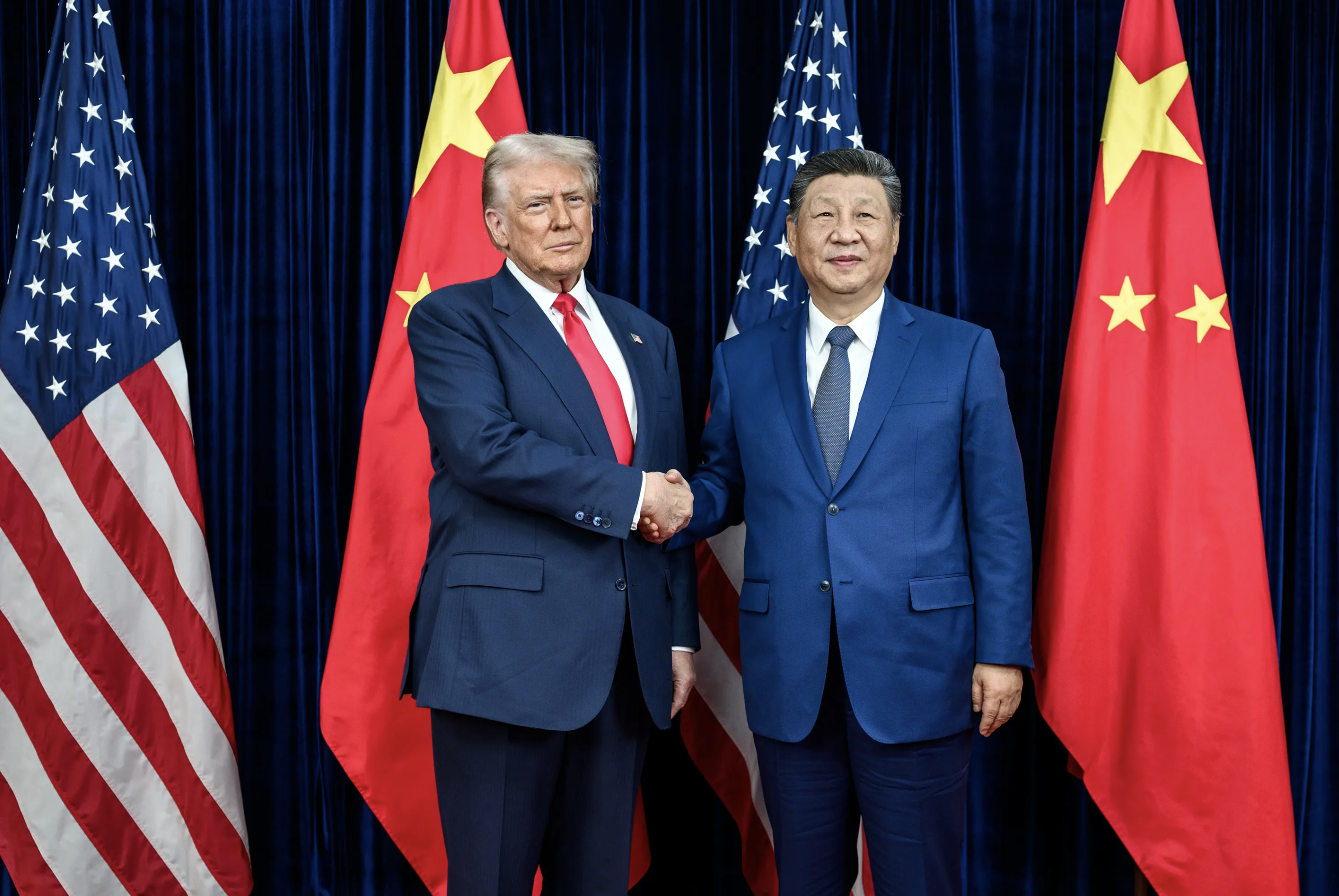
The court order was not the end of the media’s trouble, however. Lawyers for the outlets said White House officials repeatedly violated the order on September 24, and reporters did not get back in until around noon. That evening, journalists from MS NOW and CNN were barred from the arrival ceremony for Chinese President Xi Jinping’s state dinner as well.
The AP Precedent
This is not the administration’s first ban. In February 2025, the White House barred the Associated Press from the press pool, the Oval Office, and Air Force One after the AP kept using the name “Gulf of Mexico.” Judge Trevor McFadden, also a Trump appointee, ruled that once the government admits some journalists, it “cannot then shut those doors to other journalists because of their viewpoints.” A D.C. Circuit panel put that ruling on hold, finding that restricted spaces like the Oval Office and Air Force One are not public forums where the First Amendment guarantees equal access. The same court noted, however, that passes to larger spaces like the East Room cannot be denied based on content. The full appeal, argued last November, remains undecided.
What Comes Next
Together, the two cases show roughly where the legal line sits. Kelly’s order gets reporters back onto the White House grounds, but the AP precedent suggests courts will let the president decide who stands in the Oval Office and who flies on his plane. Legal scholar Eugene Volokh argues that Trump can very likely still exclude CNN from Air Force One. Kelly’s order expires in early October, when he will consider a longer preliminary injunction. Jameel Jaffer of the Knight First Amendment Institute described the bans as part of a “broader pattern” that threatens the public’s right to know, not just the outlets involved.
Read More Here
- Kevin Breuninger and Dan Mangan, CNBC
- Joey Garrison, USA Today
- Alexx Altman-Devilbiss, ABC
- NPR
- Melissa Quinn, Jacob Rosen, and Joe Walsh, CBS News
- Al Jazeera
- Megan Brand and Raquel Coronell Uribe, NBC News
- Eugene Volokh, Reason
- Clearinghouse
Extemp Analysis by Ian Cheng
Question: Will Donald Trump’s White House media restrictions survive in court?
AGD: This is tough for these kinds of questions. I would go with a description of a common human situation, like not being invited to a party or having your phone confiscated. It helps the judge understand the nature of the ban better.
Background: Make sure to contextualize when these media restrictions started, and where they are legally now. The AP precedent is a good thing to explain and mention (and it’s in this article). The CNN/MS NOW/Politico ban and court order is a pretty big headline, and that’s why these types of question topics will be in the pool. Use it as your context. SOS could be something related to free speech and why media is so important.
Answer: You could go either way: yes, no, or even in between. This question is phrased “media restrictions” not “restriction,” so I think going with a stance in between gives a more full-picture analysis. Each point can be a specific restriction:
- Viewpoint discrimination
A: Sherill v. Knight case established that the White House cannot revoke a journalist’s pass simply because it doesn’t like their reporting
B: Trump basing the ban on the outlets reporting “fiction and lies” on social media
C: Violates this First Amendment right
- White House grounds (ex. East Room)
A: First Amendment gives equal access to journalists in specific public forums
B: Restriction is on the broader White House grounds, where there are several public forums
C: Violates this First Amendment right
- Press pool rotation duties (journalists rotate to cover the president in small spaces where lots of people cannot fit, ex. The Oval Office)
A: In contrast, courts have historically given executive branch power to control who enters the Oval Office for security + confidentiality purposes
B: Restriction is also on press pool rotation duties on Oval Office
C: This specific Trump administration restriction has more legal justification and can likely survive in court
I would go with evaluative substructure: a) Expectation b) Violation/Verification c) Impact. Since this is a law-centered question, the A subpoints would be based on existing past precedent. I recommend putting an on top in between the second and third points to show you’re transitioning to pro-survival points. Also, don’t talk about Air Force One since it’s not in the White House. This is why reading the question is so important. Happy extemping!