Santiago Jiménez — September 29, 2026
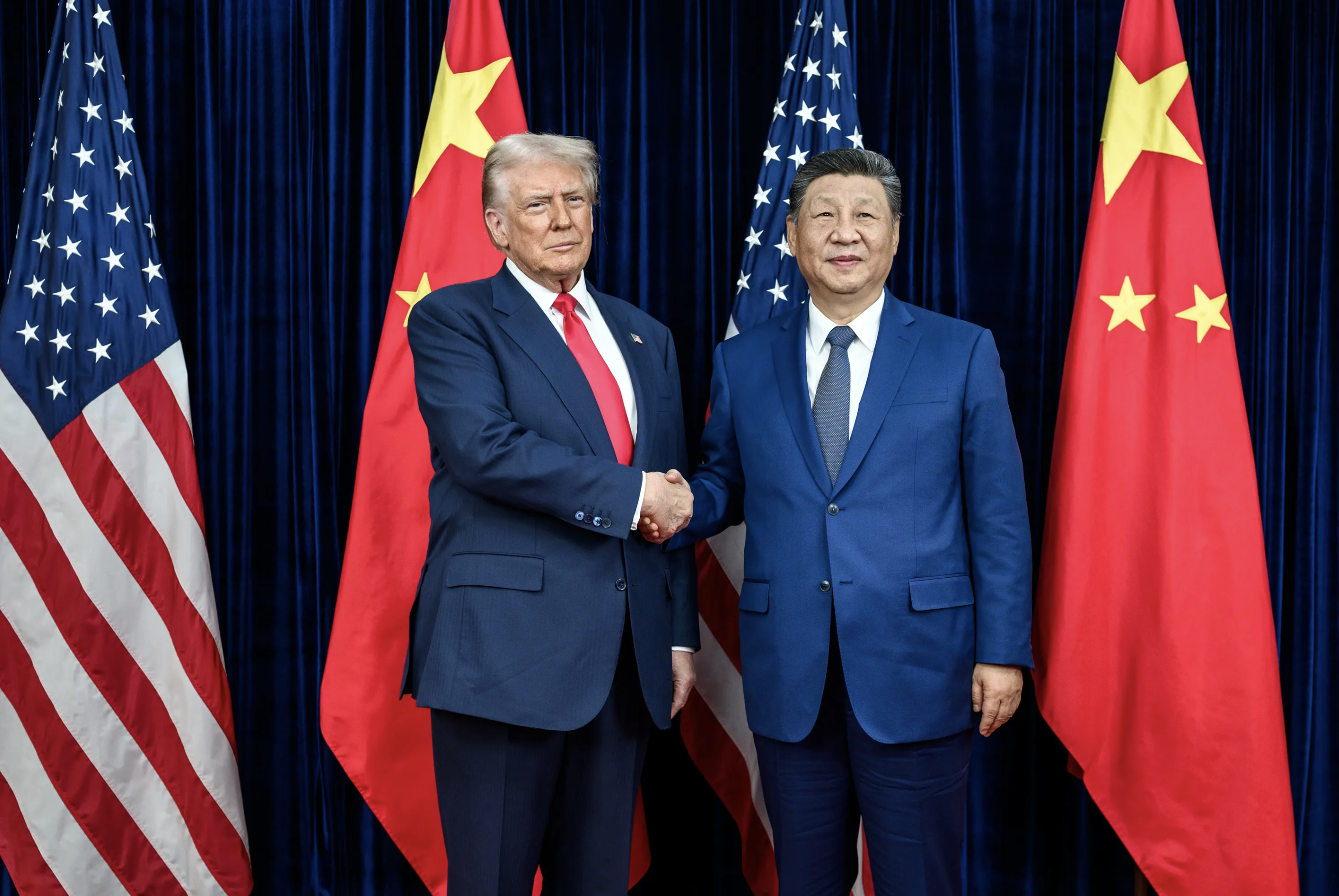
On September 24th, 2026, Donald Trump and Xi Jinping met to discuss international trade, tensions, and technology—though flashy, the meeting has been criticized as yielding little change.
A central goal of the meeting, which was held in Washington, D.C., was to reduce tensions. As such, Xi Jinping called for extensive collaborations to avoid falling into the Thucydides trap—a trend where the threat of a rising political power can trigger conflict with a historic power. Both nations expressed their hopes for strengthened communication and mutual efforts to resolve global issues.
The summit also sought to clarify trade relations between the states, with both parties discussing the growing role of AI in their nations’ economies. The leaders agreed to a two-month extension of the existing trade truce. The White House also announced recommendations to lower tariffs on $30 billion of goods in each direction, including American farm exports and Chinese-made toys and small appliances. These proposed cuts could lower costs for consumers and producers, though they still have to become policy. The White House also said the two countries agreed to establish a channel for AI incidents.
China and the United States also continued discussions on improving the flow of rare earth minerals to the U.S., with supply shortages still unresolved. These minerals are used in magnets for electric vehicles, wind turbines, and AI data centers. The International Energy Agency reports that earlier Chinese export restrictions forced some automakers to cut or briefly stop production. We can expect this frontier to remain important as green energy, computers, and AI processing become further staples of day-to-day life in both nations.
Though the meeting was largely positive in tone, the lofty nature of its propositions left major questions open, with the Atlantic Council reporting that arms sales to Taiwan remain unresolved. Xi pushed for an end to these sales, but no such bargain was publicly announced. While the meeting was certainly not a negative one, without a resolution on important security issues like Taiwan, little is guaranteed to come from the agreement.
The coming months will tell more of the meeting’s results than the present moment will, though for now, the meeting seems to be optically positive, with its tangible results still uncertain.
Read more:
- Staff, The Guardian
- Alex Leary, Alexander Ward and Lingling Wei, Wall Street Journal
- The White House
- IEA
- Staff, The Atlantic Council
Extemp Analysis by: Vidhisha Paleti
Question: Should the Trump administration continue prioritizing its own supply of rare earth minerals despite the Trump-Jinping conference?
AGD: In my opinion, go the joke route. A joke about US energy could be a good link into the background.
Background: Cite a source explaining the claim Xi Jinping made about expanding trade in rare earth minerals, and how that is significant because the US and China had been at odds over that.
SOS: It’s when considering that access to rare earth minerals could decide which nation becomes the rising power in energy, or the one left behind in the past, it is important that we ask today’s question.
Answer: Yes, in order to protect their own strategic interests.
(You could also argue no, stating that China’s dominance over rare earth minerals is so pervasive that the Trump administration should prioritize pursuing a strategic relationship with them rather than competition. You could argue that by getting more rare earth minerals, the Trump administration can increase its dominance in nuclear power instead)
3 Points:
- Avoiding overreliance on China
- Pretty obvious point. The Trump administration often values an “America First” policy that avoids becoming overreliant on other nations. To protect its interests, it would be best to continue pursuing a relationship while also stockpiling on the side.
- Pursuing new and existing relationships with other foreign nations.
- The United States already has agreements and discussions with Australia on mining and creating reserves for rare earth minerals. By pursuing these foreign relationships, the Trump administration can expand U.S. influence, which it needs to do in response to China’s Belt and Road Initiative.
- Balancing out the Chinese rare-earth mineral dominance
- The Trump administration doesn’t want China to become a superpower that surpasses the United States; however, with its rare earth mineral dominance, China has a huge advantage. The Trump administration should act to balance out this dominance to maintain world order
Analysis + Concluding Thoughts
- I would use a criteria-evaluation substructure, in which I explain in the A sub point what the Trump administration’s goal is, in the B. I would explain how prioritizing their own supply satisfies that, and in the C. explaining the broader impact of how this decision could potentially aid US citizens or provide more money, etc.
This speech has some very debatable statements, see if you could formulate some cross examination questions to attack it!